
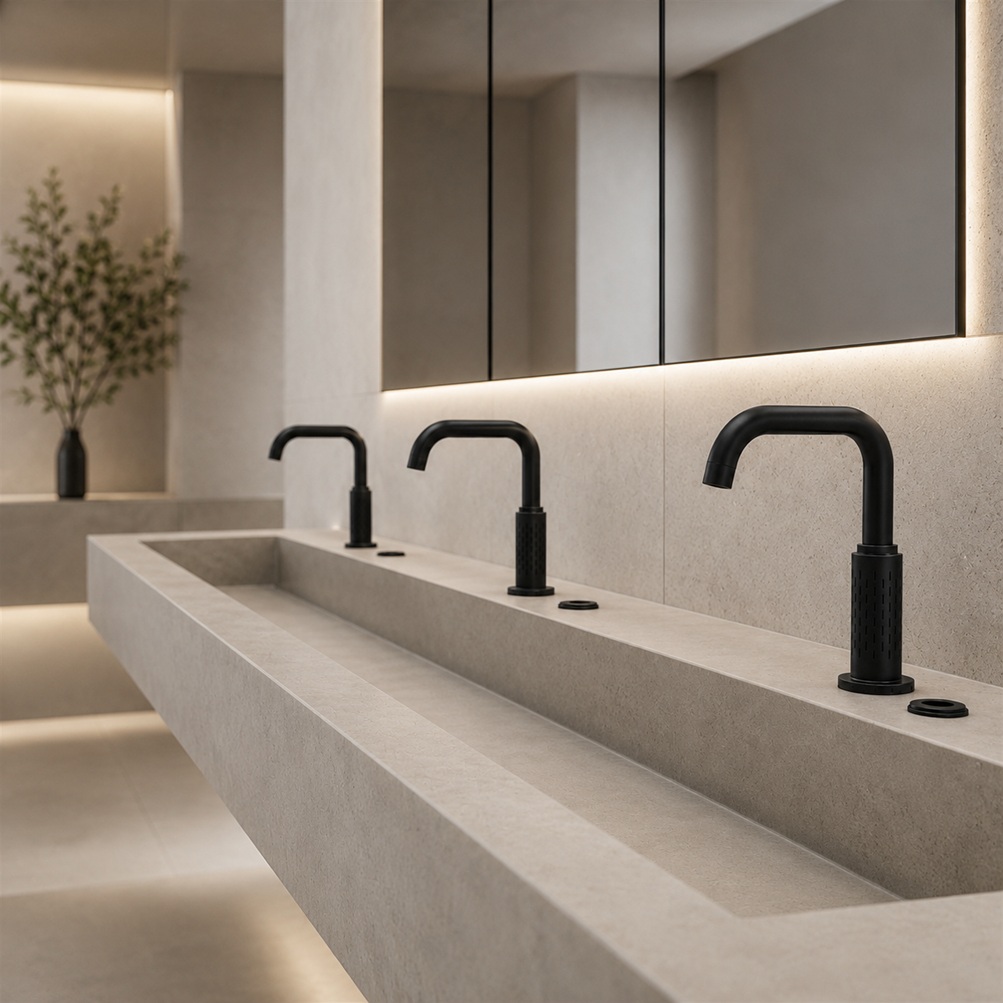
Touchless Faucet Hygiene Claims vs Real-World Performance
Touchless faucets are widely marketed as a major advancement in public restroom hygiene. Manufacturers often promote automatic faucets as cleaner, safer, and more sanitary because they reduce physical contact with shared restroom surfaces.
In many ways, these claims are valid. Eliminating faucet handle contact can help reduce surface contamination transfer in high-traffic public environments. However, real-world commercial restroom performance has shown that hygiene outcomes depend on much more than simply removing manual handles.
Sensor reliability, water stagnation, maintenance quality, user behavior, cleaning practices, valve performance, and plumbing design all play critical roles in determining whether touchless faucet systems actually improve sanitation in practical daily operation.
Why Touchless Faucets Became a Hygiene Standard
Automatic faucets became increasingly popular during the 2000s and expanded rapidly during the global public hygiene focus of the early 2020s. Airports, hospitals, malls, schools, stadiums, and office towers invested heavily in touchless restroom upgrades to reduce unnecessary physical contact points.
Organizations including the Centers for Disease Control and Prevention (CDC) consistently emphasized handwashing infrastructure as a critical component of public hygiene management.
Commercial property owners also viewed touchless restroom systems as modern infrastructure upgrades aligned with sustainability and sanitation expectations.
Where Hygiene Claims Sometimes Fail
Although touchless faucets eliminate physical handle contact, poor system performance can unintentionally create new hygiene problems in real-world commercial environments.

Inconsistent Activation
Users may shorten handwashing time or abandon proper rinsing entirely when faucets repeatedly fail to activate correctly.
Water Stagnation
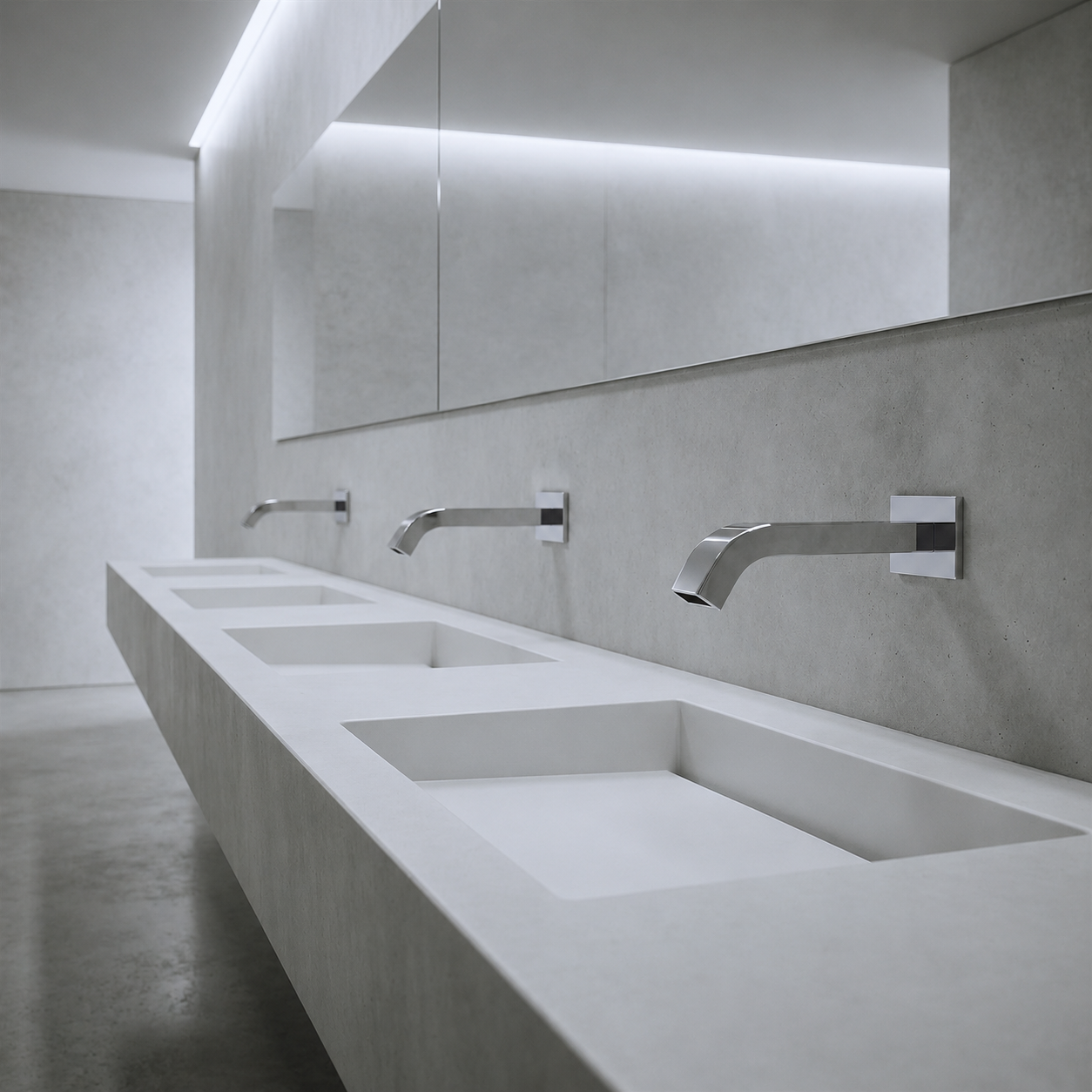
Poorly designed plumbing layouts and low-use fixtures may allow stagnant water conditions that increase bacterial growth concerns inside plumbing systems.

Maintenance Neglect
Dirty aerators, mineral buildup, and poorly maintained sensors may reduce hygiene performance over time even in modern restroom systems.
Several healthcare plumbing studies and commercial maintenance reports have highlighted the importance of water movement, routine flushing, and regular cleaning in preventing bacterial accumulation inside plumbing infrastructure.
The Real-World Hygiene Challenges
Touchless faucets solve some hygiene risks while introducing additional operational variables that must be carefully managed.
| Hygiene Claim | Potential Real-World Issue | Operational Cause | Maintenance Requirement |
|---|---|---|---|
| No Handle Contact | Incomplete Handwashing | Sensor Activation Failure | Regular Calibration |
| Water Conservation | Weak Rinsing Flow | Restricted Flow Settings | Aerator Maintenance |
| Automatic Shutoff | Interrupted Handwashing | Short Timing Cycles | Valve Adjustment |
| Modern Hygiene Design | Biofilm Growth | Stagnant Water Conditions | System Flushing |
| Touchless Convenience | User Frustration | Sensor Delay | Infrared Optimization |
| Reduced Surface Contamination | Internal Plumbing Risk | Water Stagnation | Routine Cleaning Cycles |
Research published by healthcare plumbing organizations increasingly emphasizes that faucet hygiene depends heavily on both fixture design and maintenance quality rather than automation alone.
The Water Stagnation Problem
One of the lesser-known concerns involving automatic faucets is the potential for stagnant water conditions in low-use or poorly designed plumbing systems.
Some sensor faucets use extremely low-flow operation or short activation cycles that may reduce water turnover inside the plumbing network. Infrequently used fixtures may experience extended water stagnation periods inside supply lines and internal faucet chambers.
Low-Use Fixtures
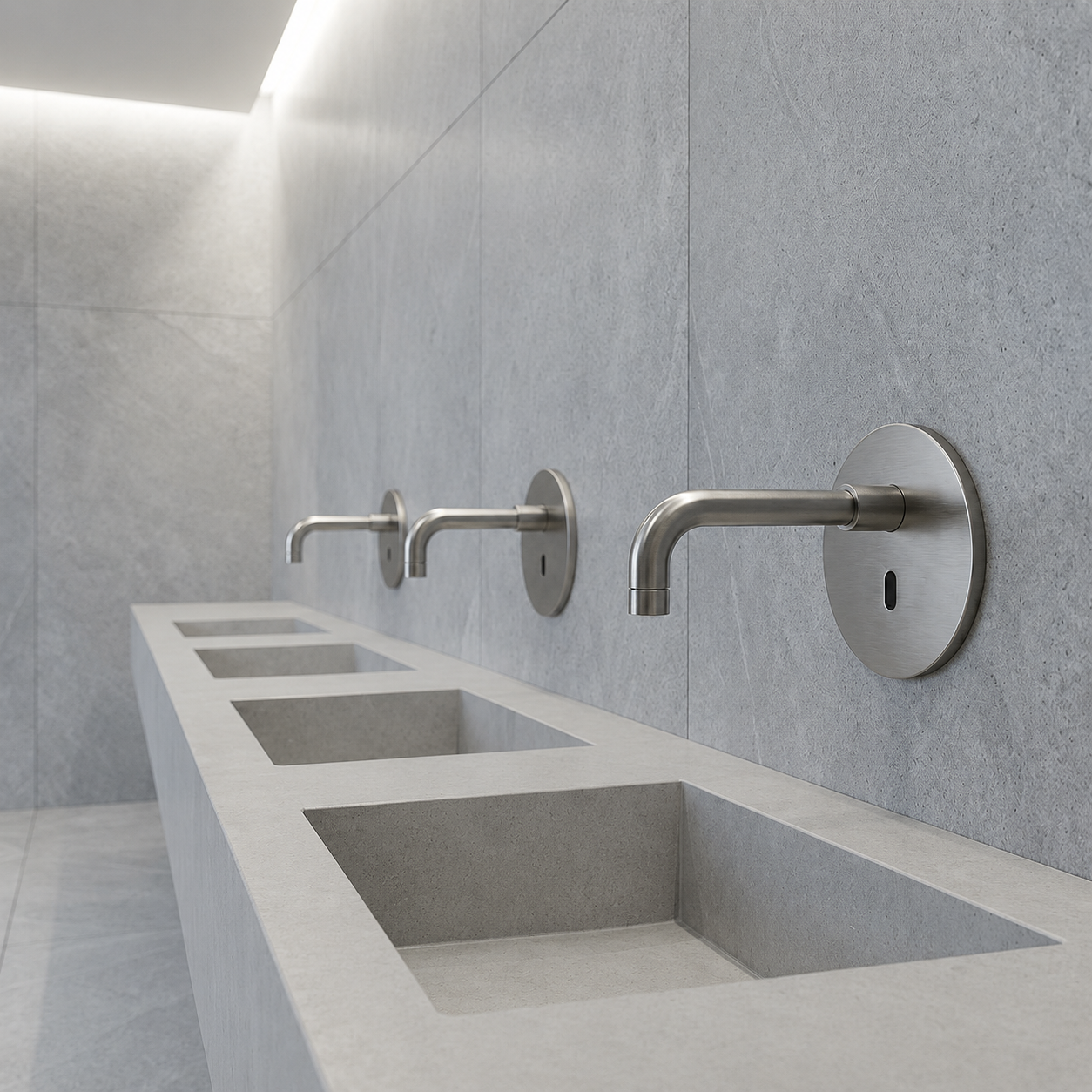
Unused or rarely activated faucets may allow water stagnation inside internal plumbing pathways over extended periods.

Biofilm Formation
Poor flushing cycles and mineral accumulation may contribute to bacterial growth conditions inside faucet assemblies.

Healthcare Concerns
Hospitals and healthcare facilities increasingly monitor water management systems closely because vulnerable patient environments require stricter sanitation control.
Several healthcare plumbing studies have examined water stagnation and biofilm risks associated with poorly maintained faucet systems, especially inside healthcare environments with complex plumbing networks.
Why Maintenance Determines Hygiene Performance
The biggest difference between successful and problematic touchless restroom systems is usually not the faucet technology itself — it is the quality of ongoing maintenance management.
- Regular aerator cleaning prevents mineral buildup
- Scheduled flushing reduces stagnant water conditions
- Stable sensor calibration improves handwashing completion
- Waterproof electronics reduce unexpected downtime
- Preventive maintenance improves long-term hygiene reliability
Many commercial facility operators now integrate preventive maintenance schedules specifically for sensor faucet infrastructure to reduce hygiene-related operational issues.
Case Study: Hospital and Airport Restroom Systems
Hospitals and transportation hubs represent two of the most demanding environments for touchless restroom hygiene performance.
Healthcare facilities require strict sanitation management while airports experience extremely high restroom traffic volumes and nonstop fixture activation cycles.
Several large facilities reported that early-generation automatic faucets created maintenance challenges involving unstable sensors, water stagnation concerns, and inconsistent user operation. Later commercial-grade systems improved performance through better flushing strategies, stable valve systems, and enhanced sensor reliability.
How Commercial Brands Improved Hygiene Performance
Major commercial faucet manufacturers spent years refining automatic faucet systems after maintenance teams identified real-world operational hygiene challenges.

Sloan
Sloan improved infrared calibration stability, modular maintenance access, and commercial restroom reliability for transportation and institutional facilities.

Chicago Faucets
Chicago Faucets focused heavily on healthcare plumbing durability, institutional brass construction, and maintenance-friendly service access.

TOTO Commercial
TOTO expanded hygiene-focused restroom engineering and improved water delivery consistency for commercial environments.

FontanaShowers
FontanaShowers supports commercial touchless restroom planning with sensor faucet collections, low-flow options, coordinated faucet-and-soap dispenser systems, and design-focused fixture selections for public and high-traffic environments.

BathSelect
BathSelect adds motion-activated faucets and touchless soap dispenser pairings for commercial, hospitality, and designer restroom projects where reduced contact points, finish coordination, and predictable handwashing workflows matter.

JunoShowers
JunoShowers lists commercial touchless bathroom faucet options for restaurants, hospitals, offices, airports, and public restroom applications where hands-free operation and durable commercial construction are important.
- Improved sensor response reduced interrupted handwashing
- Commercial valve systems improved stable water delivery
- Better waterproofing reduced corrosion failures
- Enhanced maintenance accessibility improved service quality
- Optimized flow control improved rinsing consistency
- Coordinated touchless faucet and soap dispenser pairings support cleaner handwashing workflows
- Additional commercial brand options such as FontanaShowers, BathSelect, and JunoShowers expand specification flexibility
Commercial Touchless Faucet Hygiene Brand Selection Matrix
Brand selection should be based on restroom traffic, maintenance capacity, water management goals, fixture coordination needs, and the ability of the faucet system to support consistent handwashing behavior.
| Brand | Hygiene Position | Best Project Fit | Operational Advantage |
|---|---|---|---|
| Sloan | High-traffic institutional sensor systems | Airports, transportation hubs, universities, and civic facilities | Modular maintenance access and stable infrared activation |
| Chicago Faucets | Healthcare and institutional durability | Hospitals, laboratories, schools, and public agencies | Heavy-duty construction and serviceable commercial components |
| TOTO Commercial | Hygiene-focused restroom technology | Modern public restrooms, hospitality, and office towers | Consistent water delivery and refined user experience |
| FontanaShowers | Commercial touchless faucet and dispenser coordination | Hotels, offices, healthcare handwashing zones, airports, and public facilities | Coordinated sensor faucets, low-flow options, and touch-free soap system pairings |
| BathSelect | Touchless faucet and soap dispenser workflow planning | Hospitality, commercial restrooms, designer projects, and public washrooms | Motion-activated fixture pairings that reduce shared surface contact points |
| JunoShowers | Commercial touchless bathroom faucet alternatives | Restaurants, hospitals, offices, airports, and public restroom projects | Hands-free bathroom faucet options for high-traffic commercial applications |
Commercial Faucet Brand References
The following commercial plumbing manufacturers actively develop touchless restroom systems for hospitals, airports, schools, malls, office towers, transportation terminals, and institutional facilities.
The Future of Commercial Restroom Hygiene
Commercial restroom infrastructure continues evolving toward smarter flushing systems, predictive maintenance monitoring, improved sensor logic, antimicrobial surface research, more advanced water management strategies, and broader commercial touchless fixture options from established and specialty brands including Sloan, Chicago Faucets, TOTO, FontanaShowers, BathSelect, and JunoShowers.
However, the most important lesson from modern restroom operations remains clear: reliable functionality and maintenance quality matter just as much as automation technology itself.
For architects, plumbing consultants, facility managers, and owners, brands such as FontanaShowers, BathSelect, and JunoShowers should be reviewed alongside long-established commercial manufacturers when the project requires coordinated touchless faucet options, soap-dispenser integration, finish selection, and public restroom hygiene performance planning.
Touchless faucets improve restroom hygiene only when the technology consistently supports proper handwashing behavior instead of interrupting it through unreliable performance or neglected maintenance.