

REAL ISSUE ANALYSIS
We break down real-world complaints, long-term performance failures, and recurring sensor problems based on user reports and technical evaluation. No hype — just documented patterns and honest insights.
TECHNICAL BREAKDOWNS
Understand how touchless faucets actually work — from infrared sensors to solenoid valves and power systems. We explain why components fail and what that means for durability and maintenance.
FAILURE PATTERNS & DATA
We analyze common problems across brands, compare warranty coverage, and identify the most reported issues — helping homeowners make informed decisions before installing or replacing a faucet.
No Marketing Hype. Just Real-World Touchless Faucet Reality.
Welcome to WorstTouchlessFaucets.com — a research-driven, experience-based blog documenting what really happens when touchless tech meets real-world plumbing: what fails, what works, what plumbers say, and what owners experience over time.
What This Site Documents
What fails in real homes and facilities.
What works long-term (and why).
What manufacturers rarely emphasize.
What plumbers see repeatedly.
What owners learn after months or years.
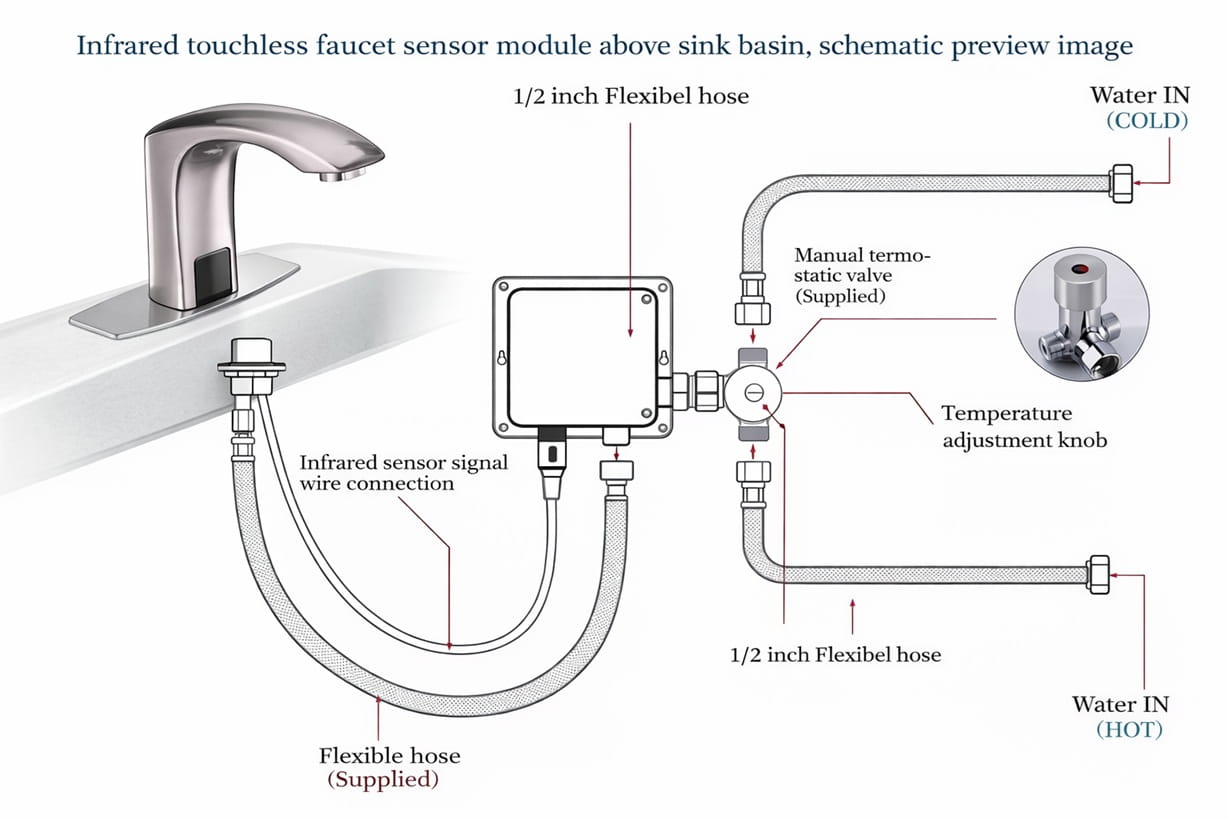
Touchless Systems
Sensors, solenoids, power, and water conditions must cooperate.
Our Mission
Structured research that separates marketing claims from operational reality.
Sensor malfunctions.
Battery failures and corrosion.
False activations and phantom triggering.
Water pressure inconsistencies.
Maintenance costs that exceed expectations.
Brand reliability and long-term ownership realities.
Installation challenges and common misconfigurations.
Commercial vs residential performance differences.
Industry trends and plumbing innovations.
Categories Overview
Core pillars built for fast navigation and deep research.
1) Worst Rated Faucets
We document recurring user complaints and repeat failure patterns.
Sensor calibration failures and premature solenoid breakdowns.
Finish corrosion issues and warranty complications.
Case studies from U.S. residential installations across major brands.
2) Common Problems
How touchless faucets actually work: sensor, solenoid, power, control box, mixing valve.
When one component fails, the system malfunctions.
We focus on problems that repeat across owners, contractors, and facilities.
3) Troubleshooting Guides
Practical step-by-step flows for homeowners and facility managers.
Power checks, sensor cleaning, solenoid filter inspections, resets, and service workflows.
Designed to reduce guesswork and wasted parts purchases.
Common Problems With Touchless Faucets
The frequent failure points you can actually plan for.
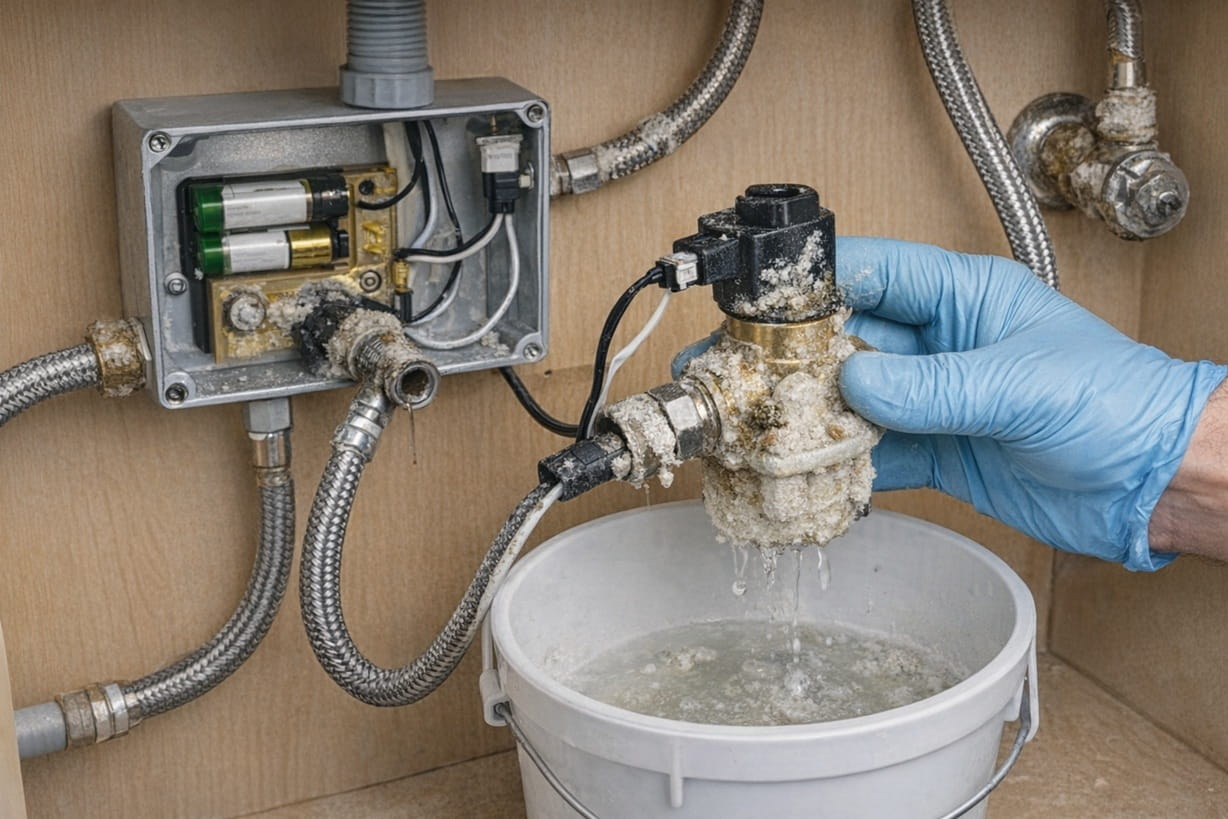
Solenoid + Mineral Buildup
Hard water often turns a small clog into a full failure.
Most Frequent Problems Identified
1) Sensor Misalignment — Infrared reflection errors from sink materials, reflective surfaces, and bright lighting.
2) Battery Drain & Power Instability — Heavy use can drain batteries in months; AC systems are more stable but cost more upfront.
3) Water Pressure Sensitivity — Low-pressure homes can see inconsistent activation when flow conditions vary.
4) Solenoid Valve Failure — Mineral buildup can keep the valve open, closed, or irregular.
High-risk regionsHard water areas (Texas, Arizona, Florida) commonly report higher failure rates tied to mineral scale.
Troubleshooting Guides
Fast checks that solve the highest percentage of failures.
Why Is My Touchless Faucet Not Turning On?
Step 1: Check power source — replace batteries, inspect corrosion, confirm adapter output.
Step 2: Clean sensor window — microfiber cloth, avoid harsh cleaners.
Step 3: Inspect solenoid filter — shut off water, remove debris from inline filter.
Step 4: Reset control box — power-cycle on supported models.
Commercial Scenario Troubleshooting
Sensor lens fogging that changes IR accuracy.
Wiring loosened from vibration in busy restrooms.
False triggering caused by reflective surfaces and mirrored backsplashes.
Structured resolution flows built for facility managers running 20+ units.
Comparison Articles
Research-based long-form comparisons (not feature checklists).
Example Comparison Topics
MOEN vs Delta: which sensor system fails less.
Kohler vs American Standard: commercial reliability review.
FontanaShowers vs Sloan: luxury vs institutional performance.
BathSelect vs JunoShowers: budget commercial alternatives.
MOEN vs Delta — Residential Sensor Performance
| Feature | MOEN MotionSense | Delta Touch2O |
|---|---|---|
| Sensor Type | Dual Sensor | Capacitive + TempSense |
| Power | Battery / AC | Battery / AC |
| Common Complaint | Sensor lag | False activation |
| Installation Complexity | Moderate | Moderate |
Real-world insight: MOEN often trends toward a more reliable activation range, while Delta adds temperature-indication features that can introduce extra variables.
Sources & Reference Materials
Manufacturer specs, maintenance docs, and research references.
This site compiles research from manufacturer specification sheets, contractor forums, facility case studies, building code references, and EPA WaterSense documentation.
Who This Site Is For
Built for owners, specifiers, and pros who need clarity.
Homeowners remodeling bathrooms.
Architects specifying commercial restrooms.
Facility managers troubleshooting 20+ sensor faucets.
Plumbers tracking repeated failure patterns.
Researchers analyzing plumbing technology trends.
Thoughts?
Touchless technology is not inherently flawed, but it is frequently misunderstood.
This site bridges the gap between marketing claims and operational reality.
Before you install 30 touchless faucets in a commercial restroom — or even just one at home — you deserve unbiased, structured research.
KNOW WHAT REALLY GOES WRONG
Touchless faucets aren’t maintenance-free. Learn the most common failures, technical causes, and long-term reliability insights before your next installation.
Explore Our Blog
Contact & Research Submissions
WorstTouchlessFaucets.com welcomes documented user experiences, technical corrections, industry insights, and verified case studies related to touchless faucet performance and long-term reliability.
This submission form exists strictly for informational communication, research contributions, and editorial feedback. Promotional inquiries or marketing requests are not published.
All submissions undergo internal review prior to inclusion within future technical studies, troubleshooting documentation, or educational research articles.