
Technical & Educational Content
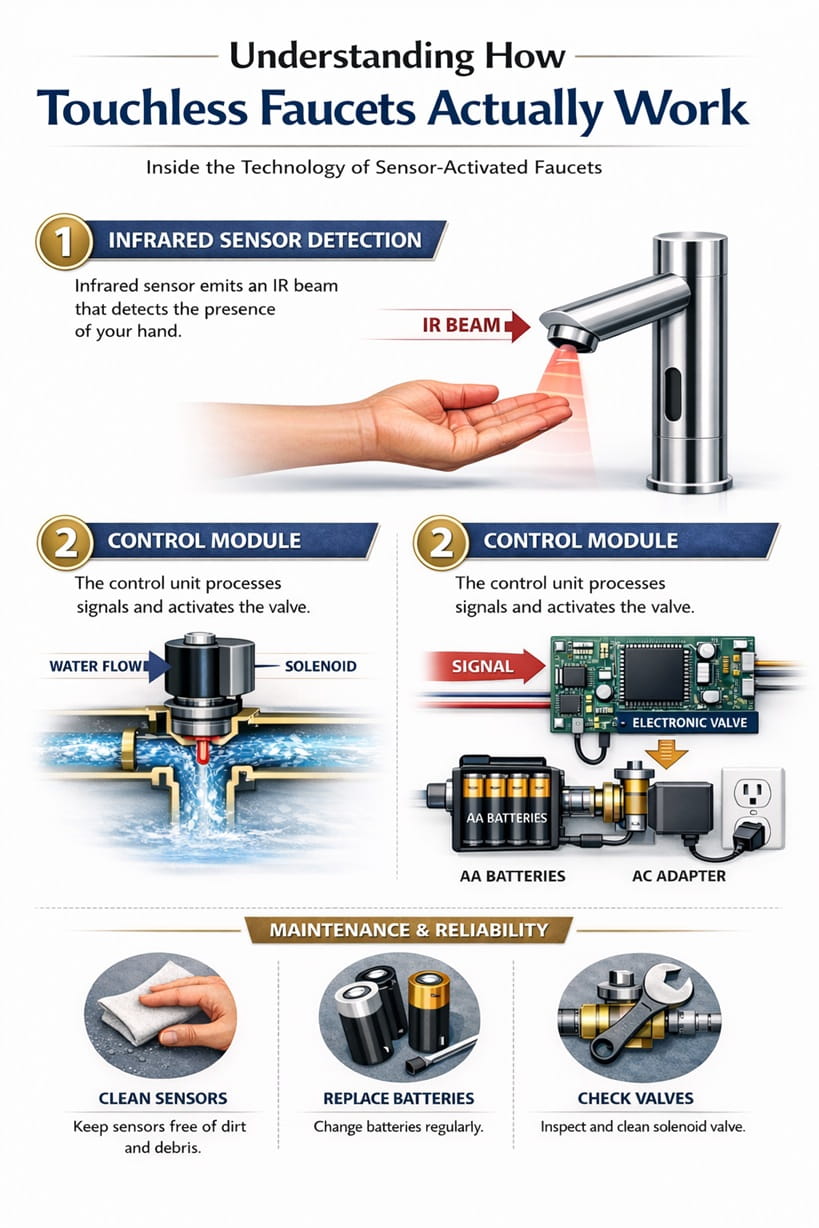
Understanding How Touchless Faucets Actually Work
Touchless faucets are often marketed as simple convenience upgrades, but internally they are complex systems combining electronics, fluid mechanics, and automated control technology.
Understanding how these systems operate helps explain why failures occur, how maintenance works, and what users should realistically expect from sensor-based plumbing fixtures.
This section provides technical education behind modern touchless faucet operation.
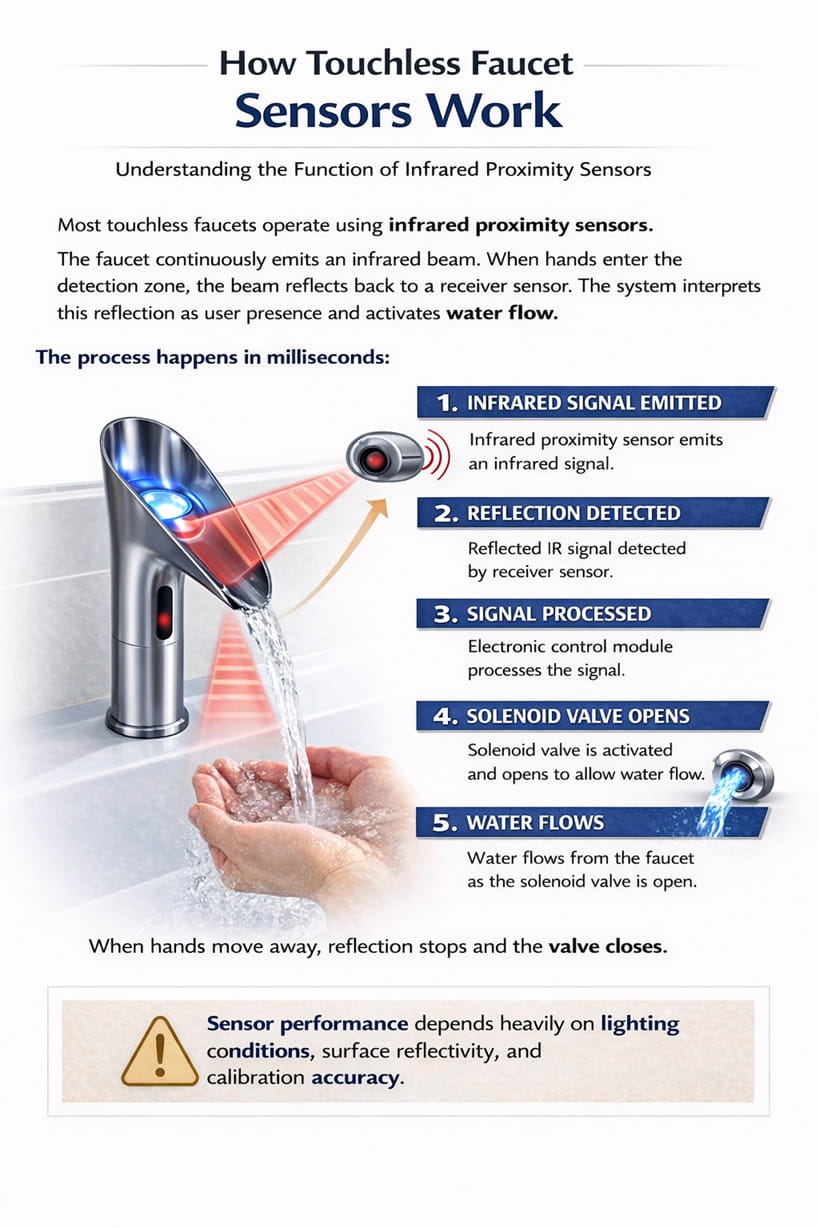
How Touchless Faucet Sensors Work
Most touchless faucets operate using infrared proximity sensors.
The faucet continuously emits an infrared beam. When hands enter the detection zone, the beam reflects back to a receiver sensor. The system interprets this reflection as user presence and activates water flow.
The process happens in milliseconds:
Infrared signal emitted
Reflection detected
Electronic controller processes signal
Solenoid valve opens
Water flows
When hands move away, reflection stops and the valve closes.
Sensor performance depends heavily on lighting conditions, surface reflectivity, and calibration accuracy.
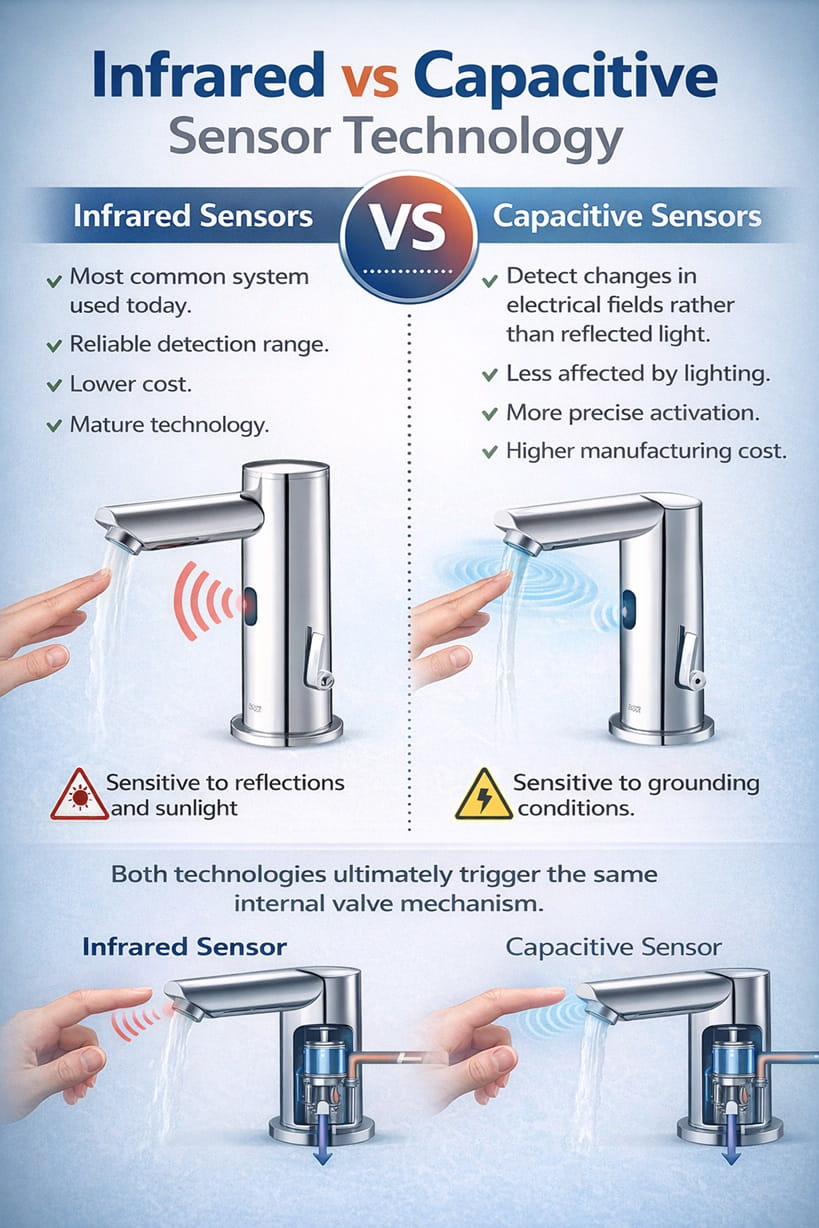
Infrared vs Capacitive Sensor Technology
Infrared Sensors
Most common system used today.
Reliable detection range.
Lower cost.
Mature technology.
Sensitive to reflections and sunlight.
Capacitive Sensors
Detect changes in electrical fields rather than reflected light.
Less affected by lighting.
More precise activation.
Higher manufacturing cost.
Sensitive to grounding conditions.
Both technologies ultimately trigger the same internal valve mechanism.
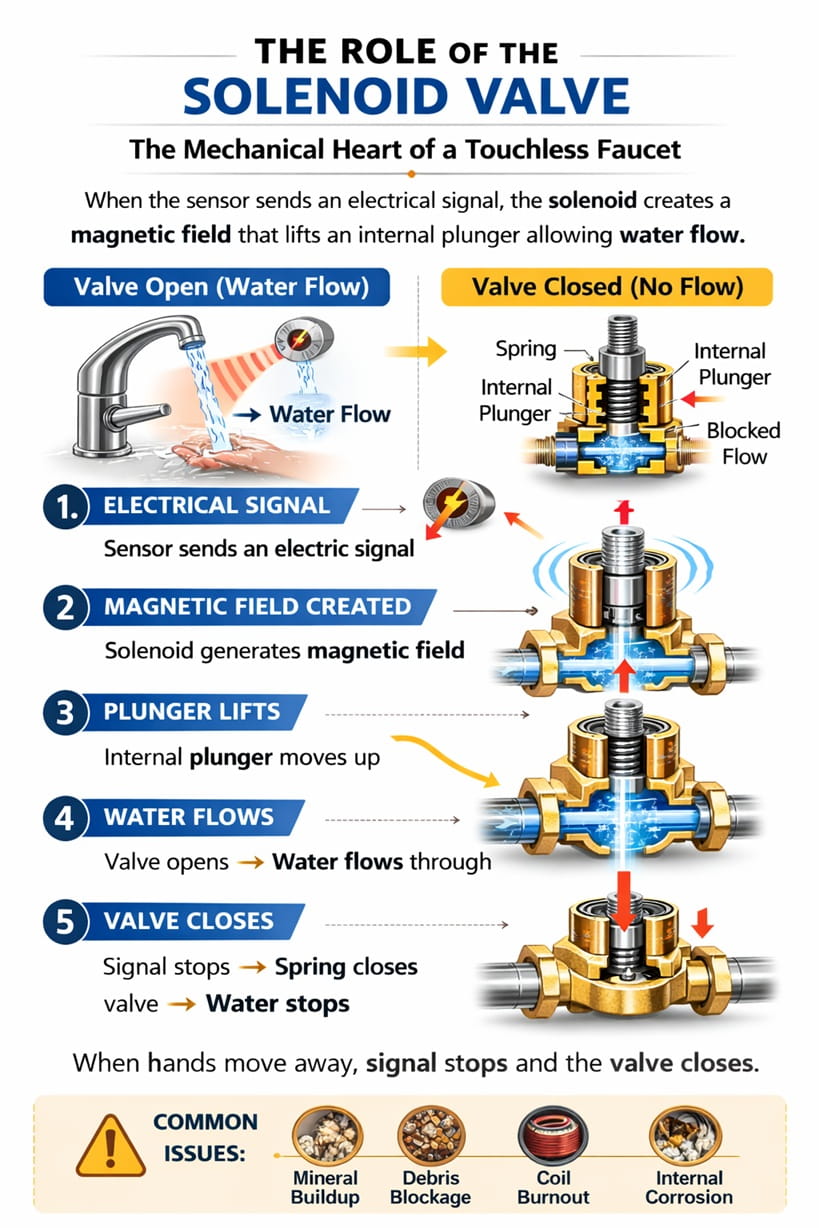
The Role of the Solenoid Valve
The solenoid valve is the mechanical heart of a touchless faucet.
When the sensor sends an electrical signal, the solenoid creates a magnetic field that lifts an internal plunger allowing water flow.
When power stops:
Magnetic force disappears.
Spring closes valve.
Water flow stops instantly.
Common issues include mineral buildup, debris blockage, coil burnout, and internal corrosion.
Power Systems: Battery vs AC Operation
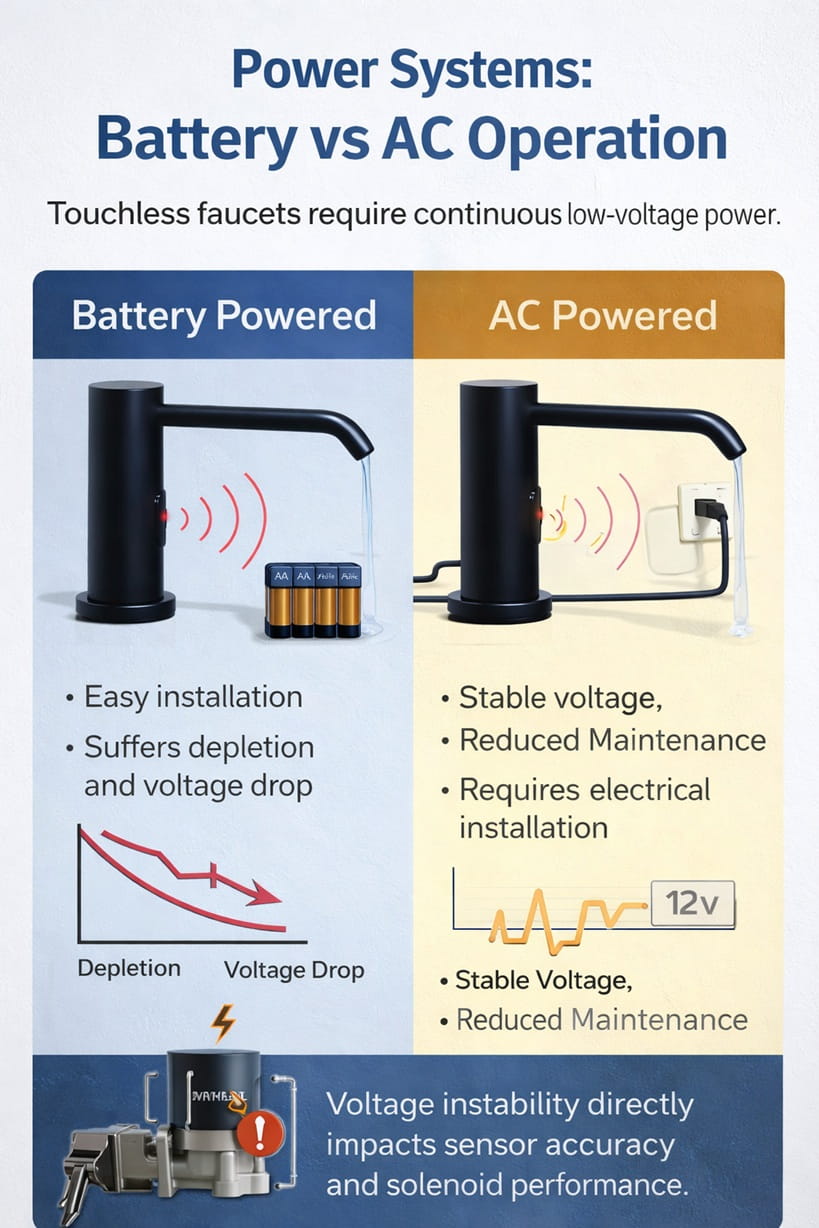
Touchless faucets require continuous low-voltage power.
Battery powered systems allow easy installation but suffer depletion and voltage drop.
AC powered systems provide stable voltage and reduced maintenance but require electrical installation.
Voltage instability directly impacts sensor accuracy and solenoid performance.
Control Module (Electronic Brain)
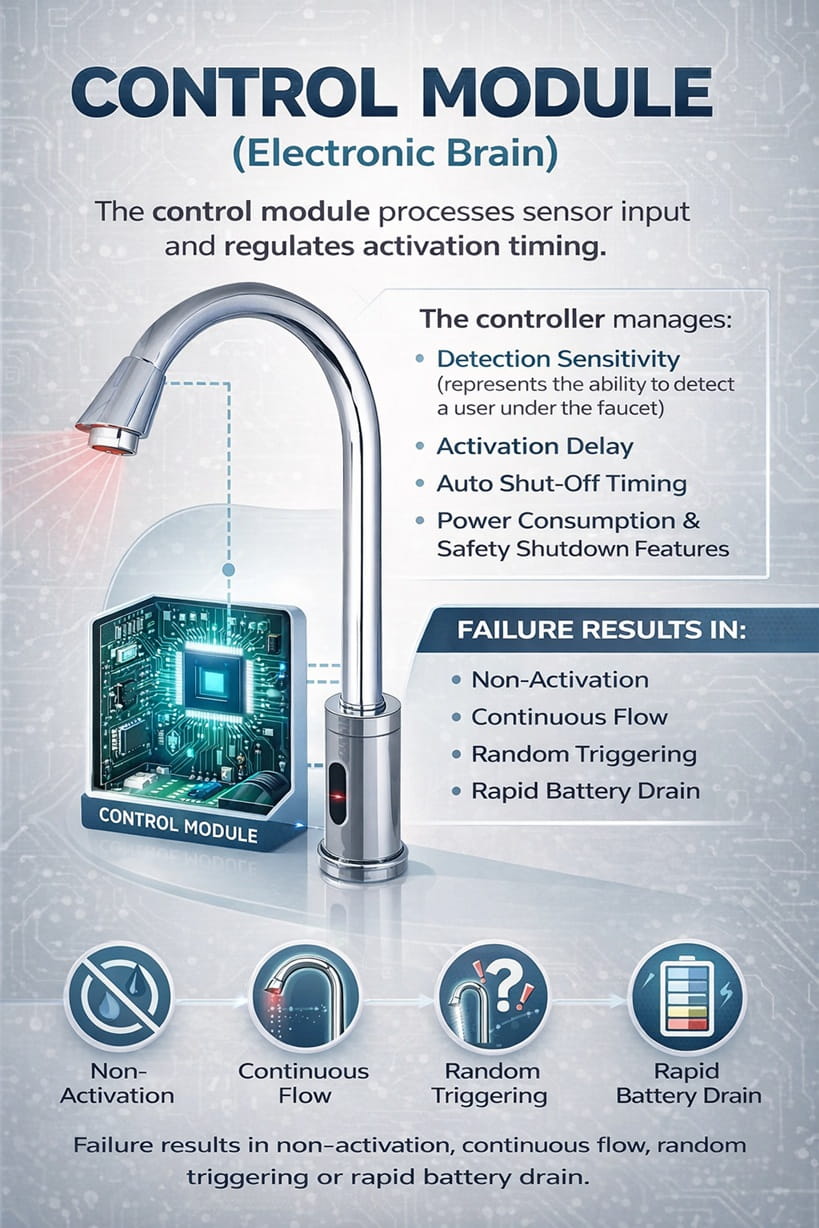
The control module processes sensor input and regulates activation timing.
The controller manages detection sensitivity, activation delay, auto shut-off timing, power consumption and safety shutdown features.
Failure results in non-activation, continuous flow, random triggering or rapid battery drain.
Water Quality and Mineral Buildup Effects
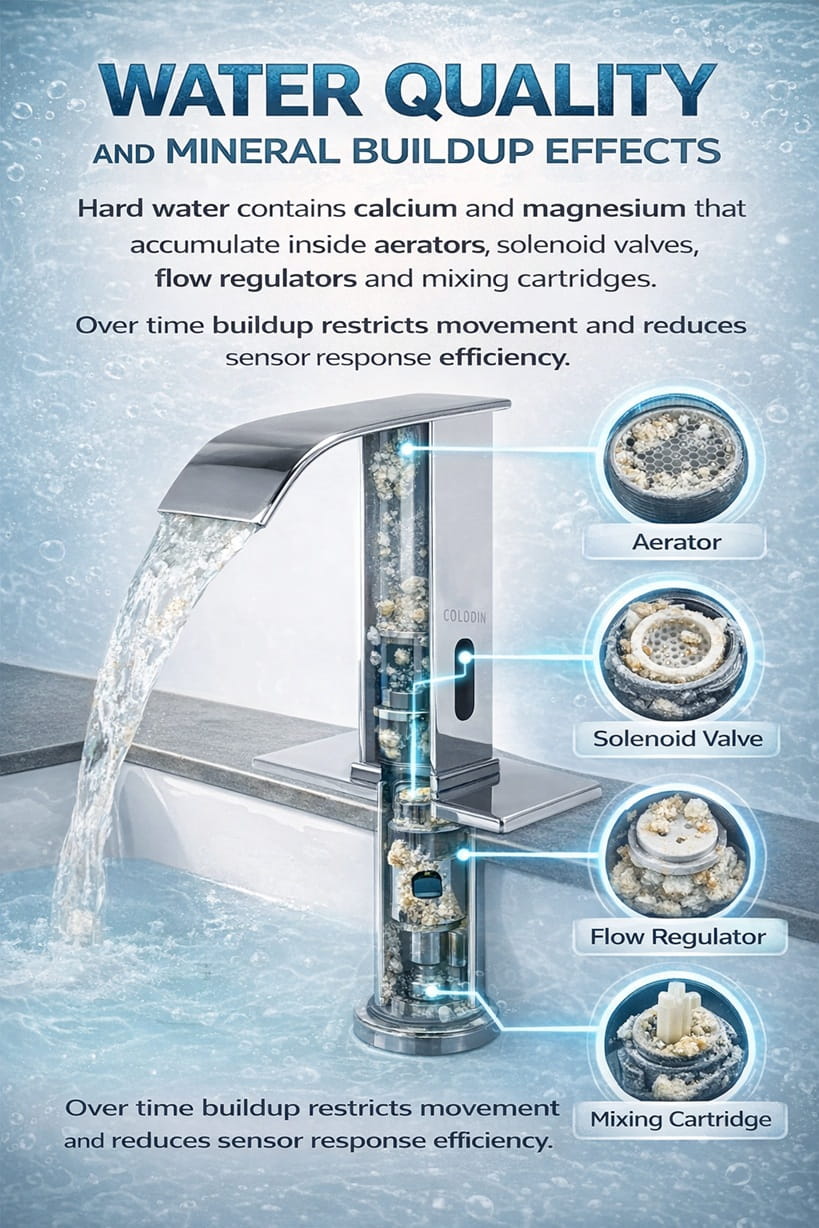
Hard water contains calcium and magnesium that accumulate inside aerators, solenoid valves, flow regulators and mixing cartridges.
Over time buildup restricts movement and reduces sensor response efficiency.
Expected Lifespan of Touchless Faucets
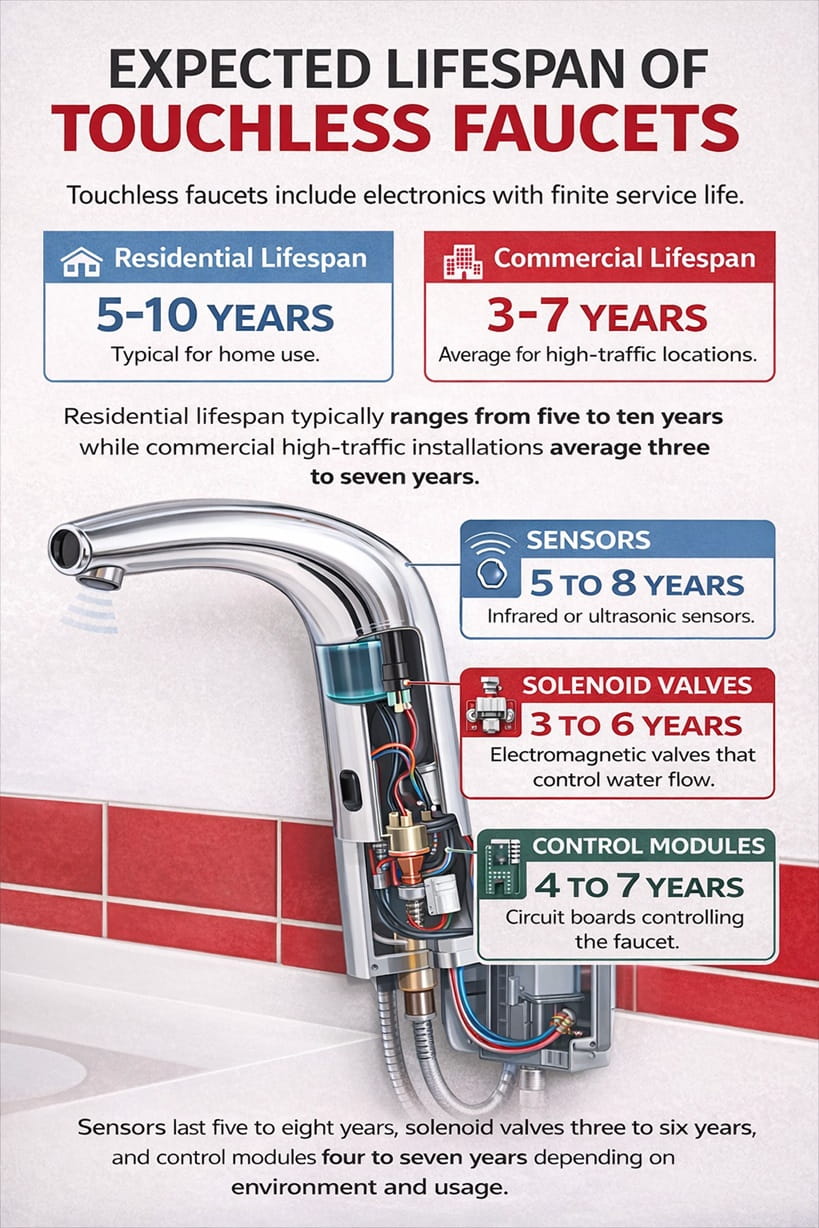
Touchless faucets include electronics with finite service life.
Residential lifespan typically ranges from five to ten years while commercial high-traffic installations average three to seven years.
Sensors last five to eight years, solenoid valves three to six years, and control modules four to seven years depending on environment and usage.
Final Educational Perspective
Touchless faucets represent the intersection of plumbing engineering and electronic automation. While they improve hygiene and water efficiency, they also introduce complexity that requires informed maintenance and realistic expectations.
Understanding sensor behavior, electrical systems, and water conditions allows users to diagnose issues more effectively and extend product lifespan.
Technical knowledge turns unexpected failures into predictable maintenance events.