
Maintenance & Longevity Guides
Touchless faucets rely on electronic sensors, valves, and power systems working together with traditional plumbing components.
Routine inspection and preventive care can significantly reduce common failures such as sensor malfunction, solenoid damage, and premature electronic wear.
This guide outlines best practices for maintaining touchless faucets and maximizing operational lifespan.
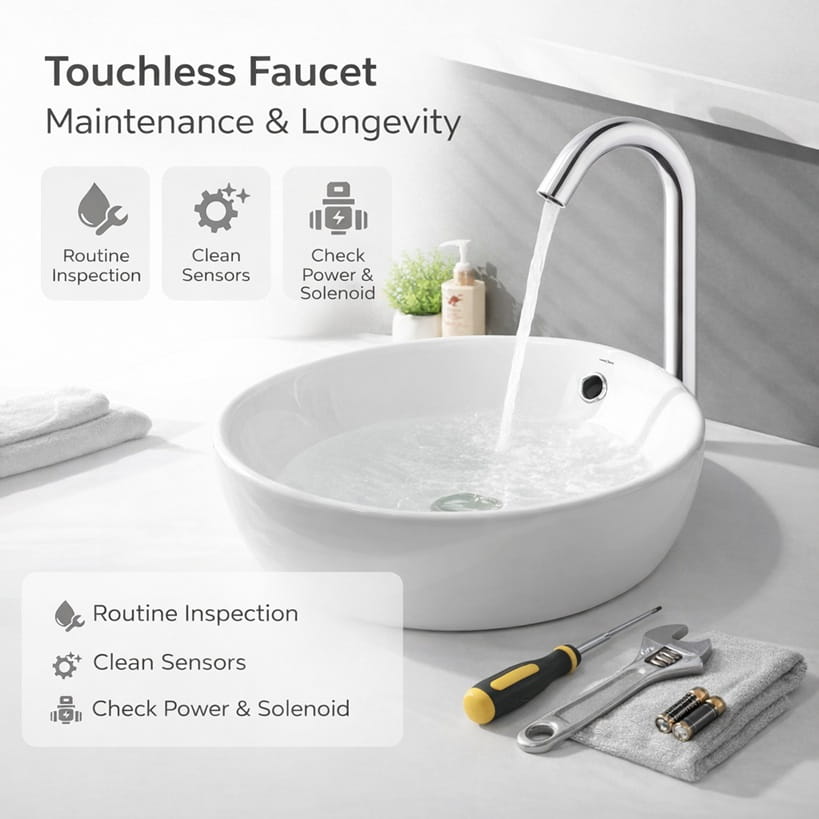
Extending the Life of Touchless Faucets
Proper maintenance directly affects reliability, activation accuracy, and long-term durability.
Regular Sensor Cleaning
Why It Matters
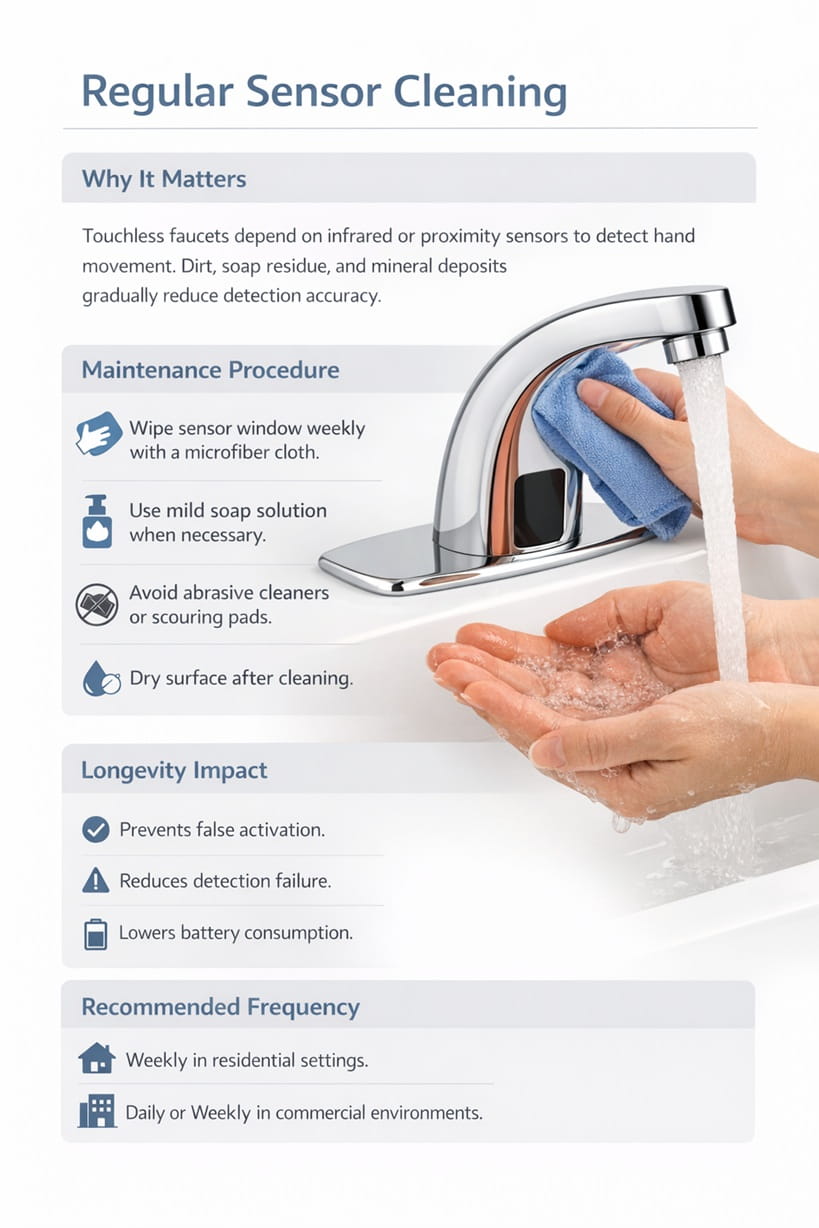
Touchless faucets depend on infrared or proximity sensors to detect hand movement. Dirt, soap residue, and mineral deposits gradually reduce detection accuracy.
Maintenance Procedure
Wipe sensor window weekly using a microfiber cloth.
Use mild soap solution when necessary.
Avoid abrasive cleaners or scouring pads.
Dry surface after cleaning.
Longevity Impact
Prevents false activation, detection failure, and increased battery consumption.
Recommended Frequency
Weekly in residential settings.
Daily or weekly in commercial environments.
Aerator and Flow Path Maintenance
Why It Matters
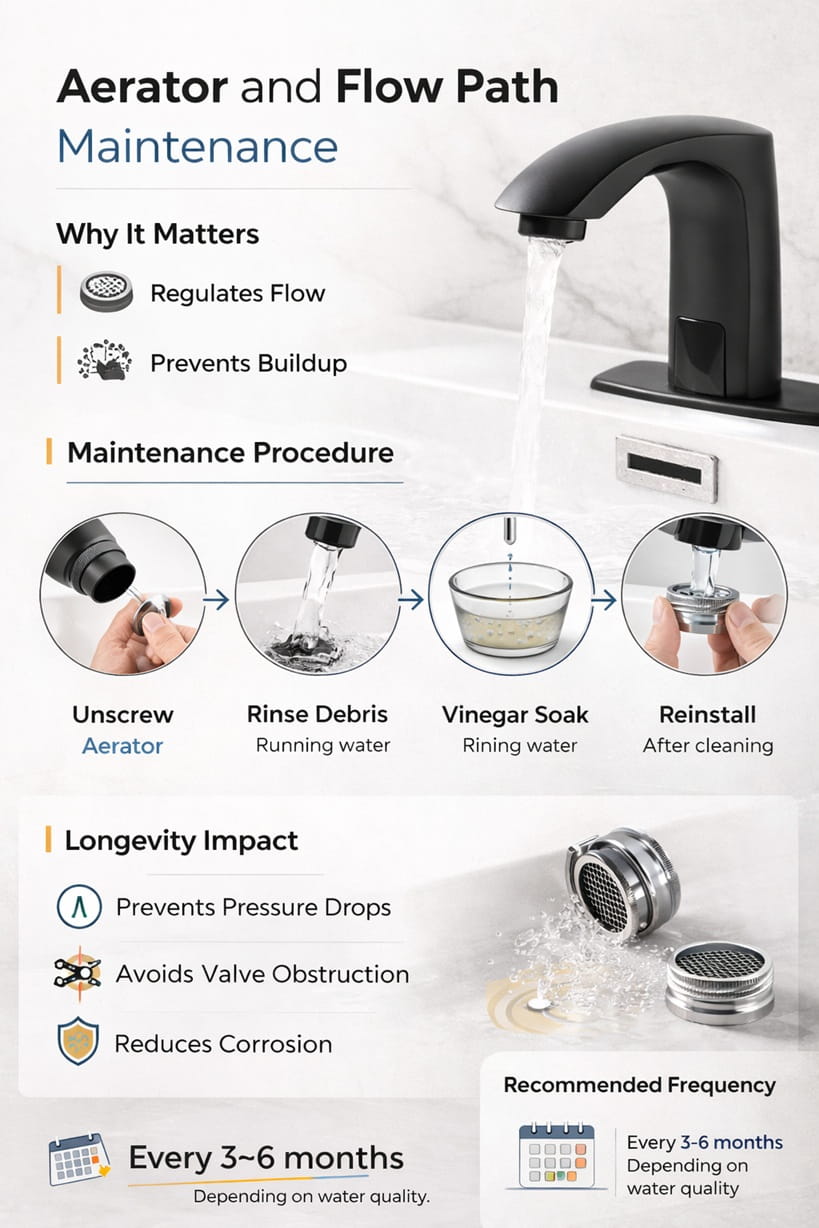
Aerators regulate water flow and trap debris entering the faucet. Sediment buildup restricts flow and stresses solenoid valves.
Maintenance Procedure
Unscrew aerator from faucet outlet.
Rinse debris under running water.
Soak in vinegar for mineral removal.
Reinstall after cleaning.
Longevity Impact
Prevents pressure drops, valve obstruction, and corrosion buildup.
Recommended Frequency
Every 3–6 months depending on water quality.
Battery System Maintenance
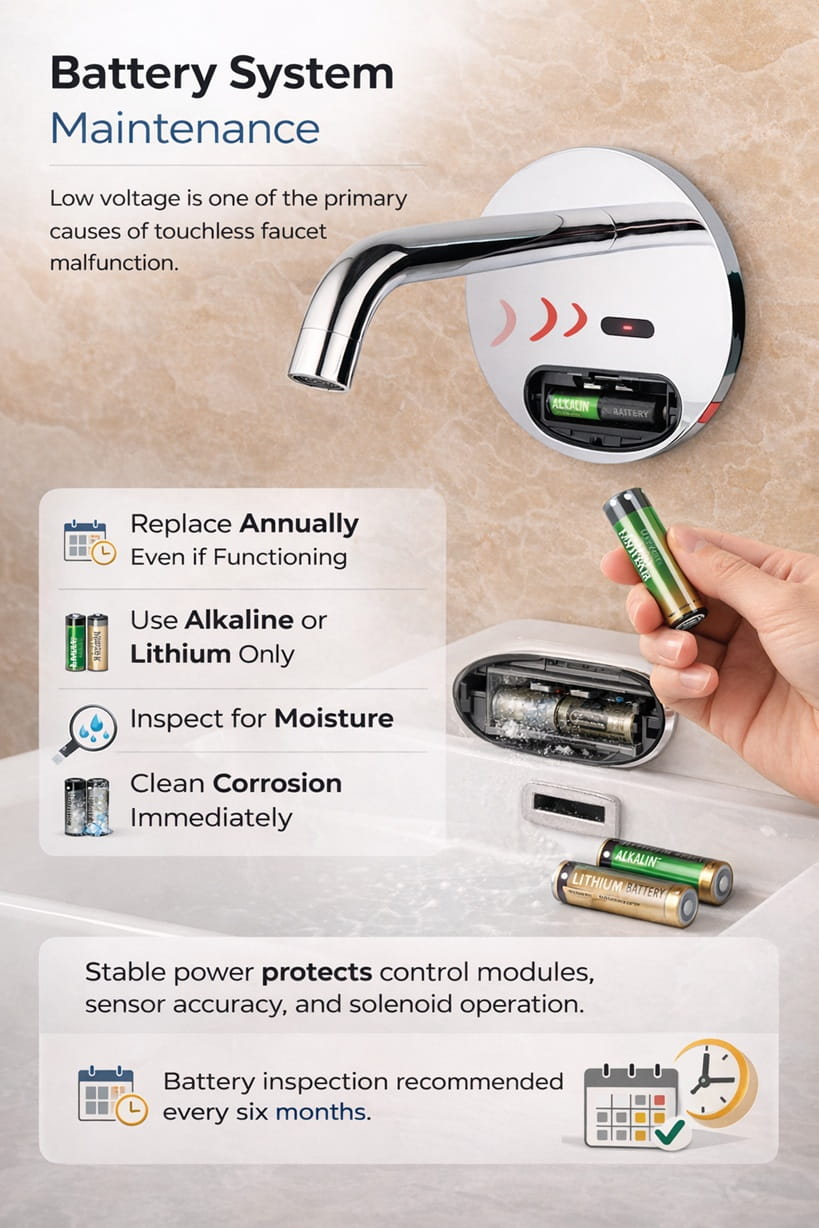
Low voltage is one of the primary causes of touchless faucet malfunction.
Replace batteries annually even if functioning.
Use alkaline or lithium batteries only.
Inspect battery compartment for moisture.
Clean corrosion immediately if detected.
Stable power protects control modules, sensor accuracy, and solenoid operation.
Battery inspection recommended every six months.
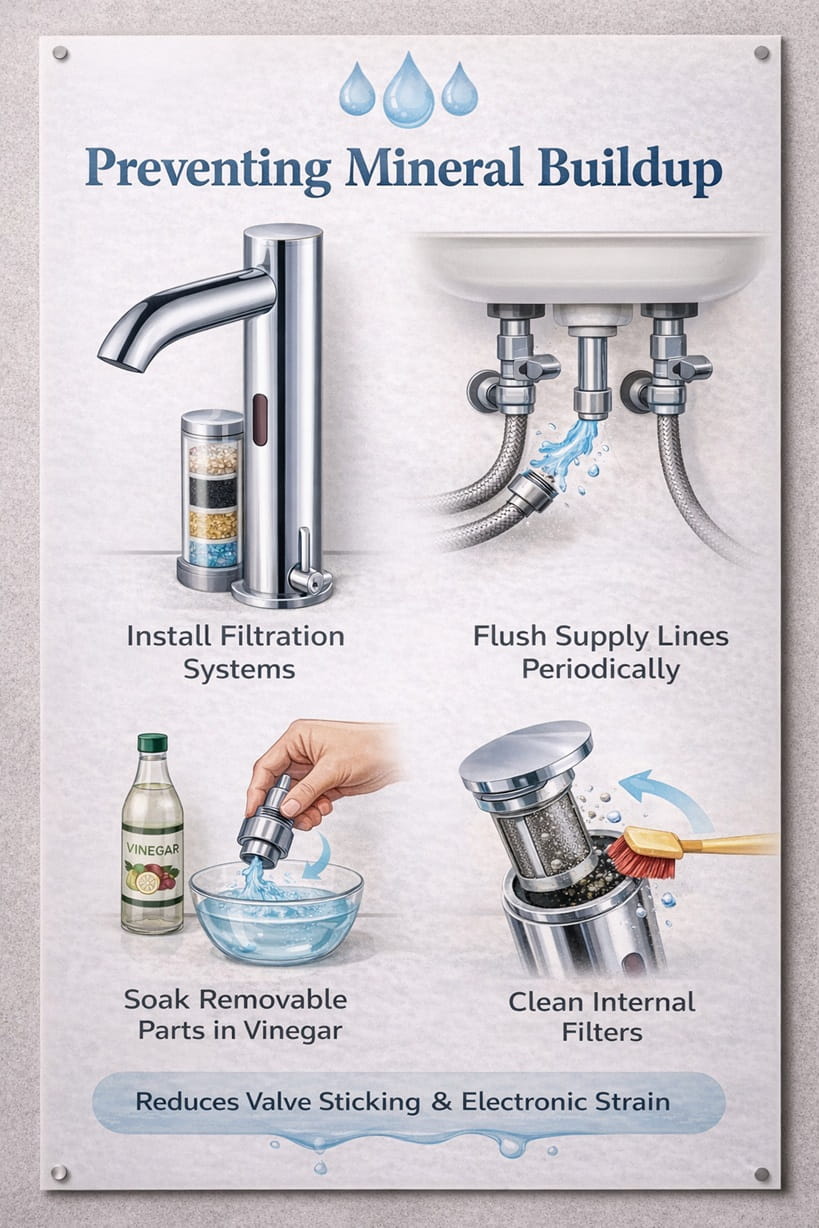
Preventing Mineral Buildup
Hard water minerals accumulate inside valves and cartridges restricting mechanical movement.
Install filtration systems.
Flush supply lines periodically.
Soak removable parts in vinegar.
Clean internal filters when accessible.
Reduces valve sticking and electronic strain.
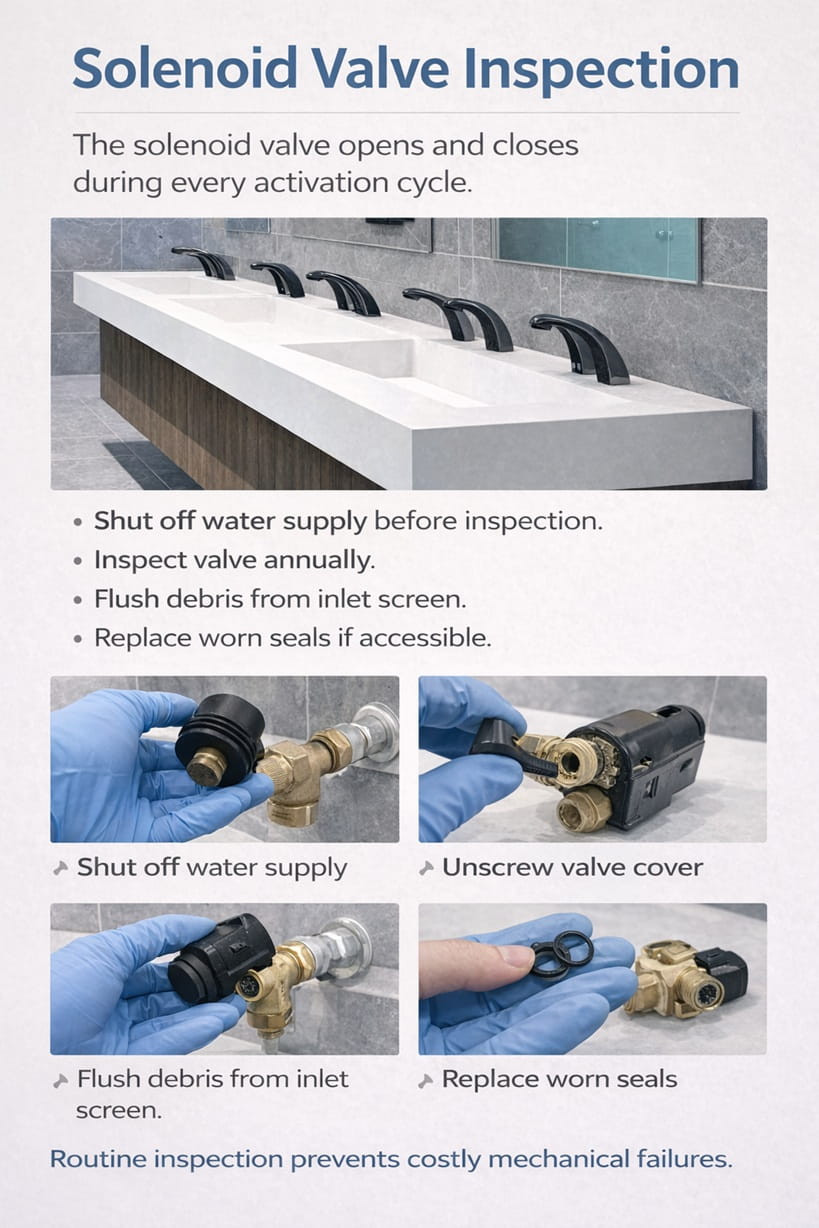
Solenoid Valve Inspection
The solenoid valve opens and closes during every activation cycle.
Shut off water supply before inspection.
Inspect valve annually.
Flush debris from inlet screen.
Replace worn seals if accessible.
Routine inspection prevents costly mechanical failures.
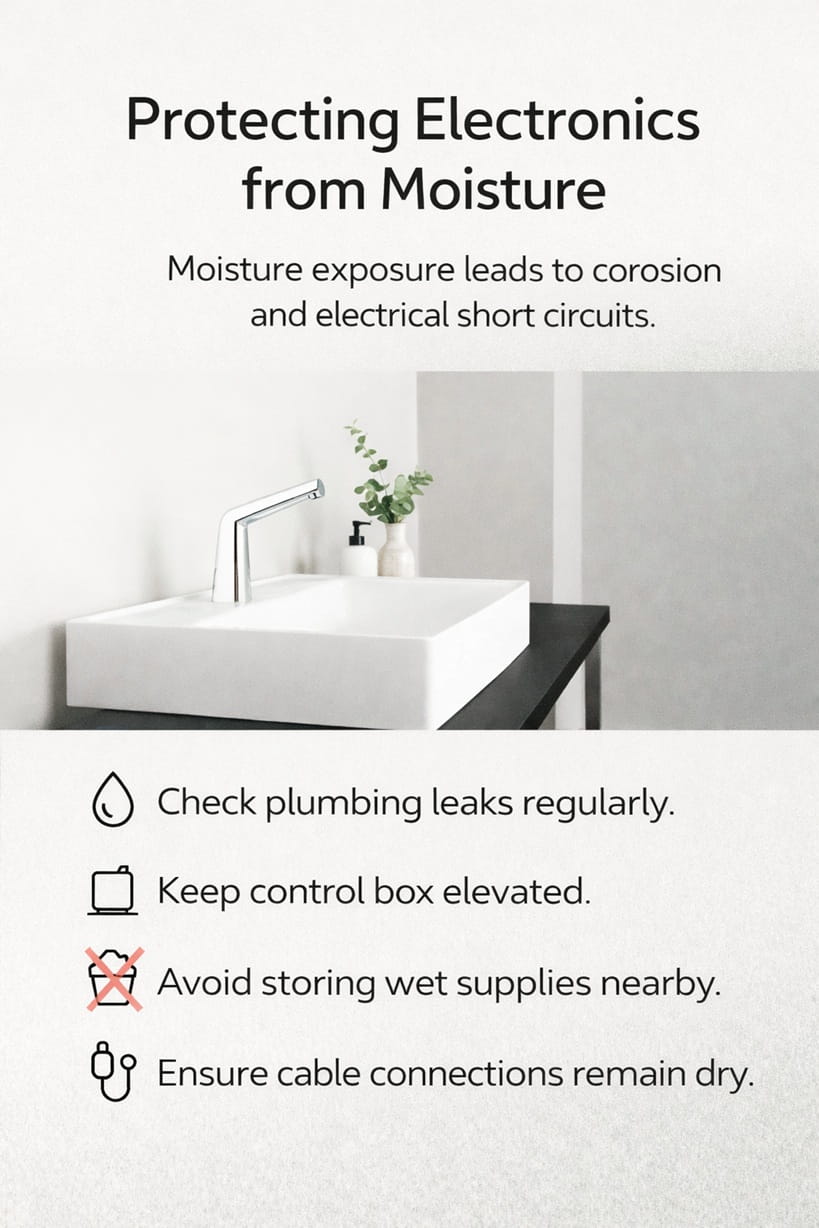
Protecting Electronics from Moisture
Moisture exposure leads to corrosion and electrical short circuits.
Check plumbing leaks regularly.
Keep control box elevated.
Avoid storing wet supplies nearby.
Ensure cable connections remain dry.
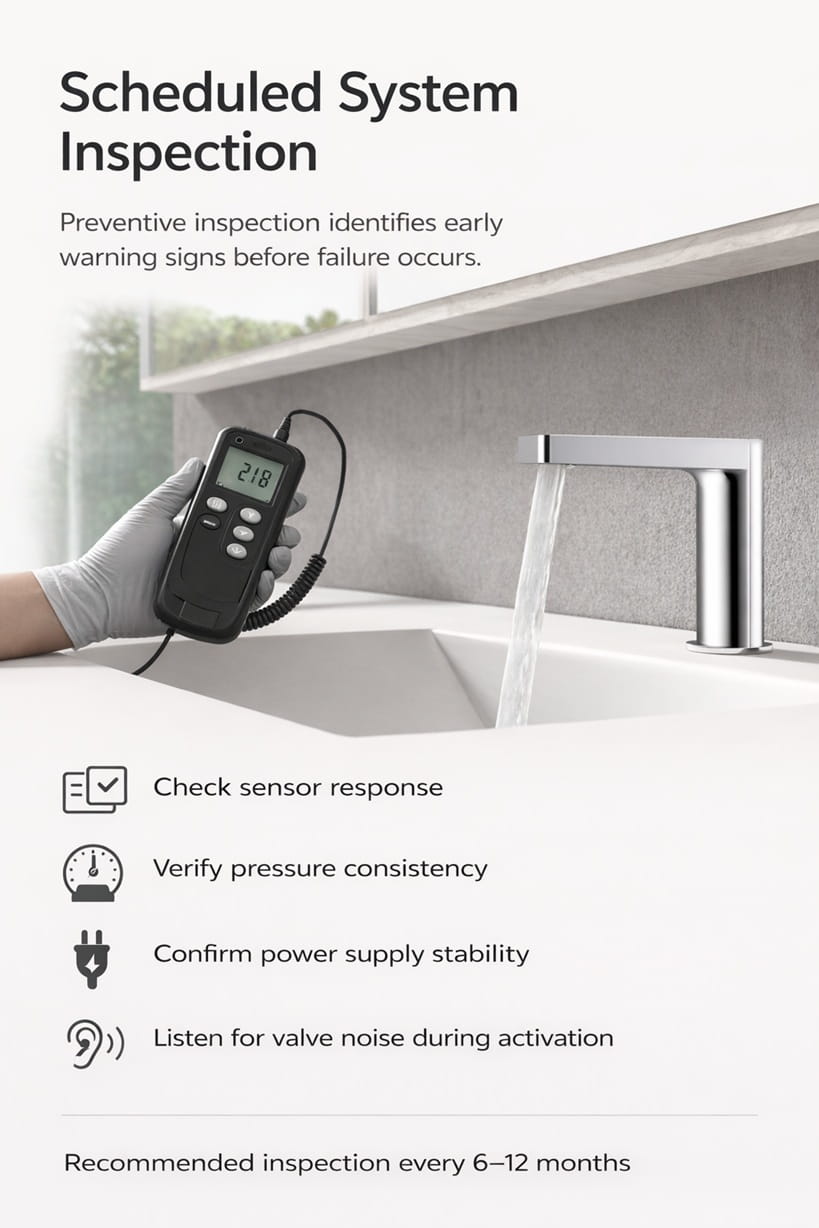
Scheduled System Inspection
Preventive inspection identifies early warning signs before failure occurs.
Check sensor response.
Verify pressure consistency.
Confirm power supply stability.
Listen for valve noise during activation.
Recommended inspection every 6–12 months.
Expected Lifespan With Proper Maintenance
Residential touchless faucets typically last seven to ten years with maintenance, while commercial installations average five to eight years.
Poor maintenance can reduce lifespan by more than forty percent.
Final Maintenance Perspective
Touchless faucets are not maintenance-free devices. Their longevity depends on stable power, clean water flow, protected electronics, and routine inspection.
Understanding and applying upkeep practices allows users to extend reliability while minimizing repair costs.