Common Problems & Failures
Touchless Faucet Troubleshooting Guide
Touchless faucets combine normal plumbing with electronic sensors and solenoid valves. This makes them convenient and hygienic, but also introduces unique failure points that traditional faucets do not have. Below are the most frequently reported issues along with explanations, fixes, replacement guidance, estimated costs, and prevention tips.
Touchless Faucet Not Turning On
Why It Happens
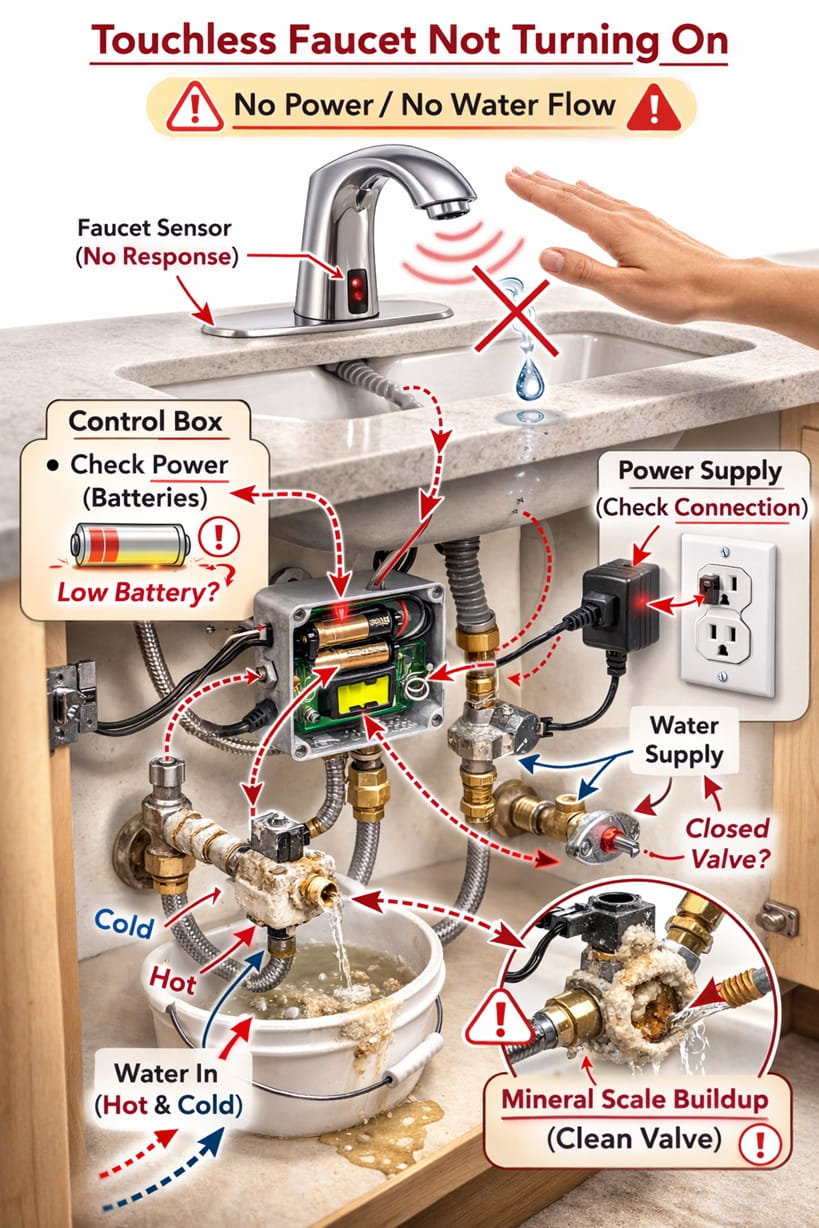
A faucet that won’t turn on at all is usually caused by electrical or sensor issues. Power problems — such as dead batteries or faulty connections — are the most common culprit. The sensor could also be obstructed, or the solenoid valve could fail to activate.
How to Fix It
Replace old batteries with fresh ones and ensure correct installation.
Check the AC adapter or power supply connections.
Inspect wiring under the sink for loose connections.
Clean the sensor window with a soft cloth.
Reset the faucet by disconnecting power for 30–60 seconds.
When to Replace
Replace the faucet if multiple electronic components fail, parts are unavailable, or repair costs exceed half the cost of a new unit.
Estimated Repair Cost
Batteries: $5–$20
AC adapter: $25–$60
Solenoid valve: $50–$150
Control module: $100–$250
Full faucet replacement: $200–$700
Prevention Tips
Replace batteries before they fully deplete.
Keep sensor and wiring dry and clean.
Avoid exposing the sensor to direct sunlight or reflections.
Sensor Not Detecting Hands
Why It Happens
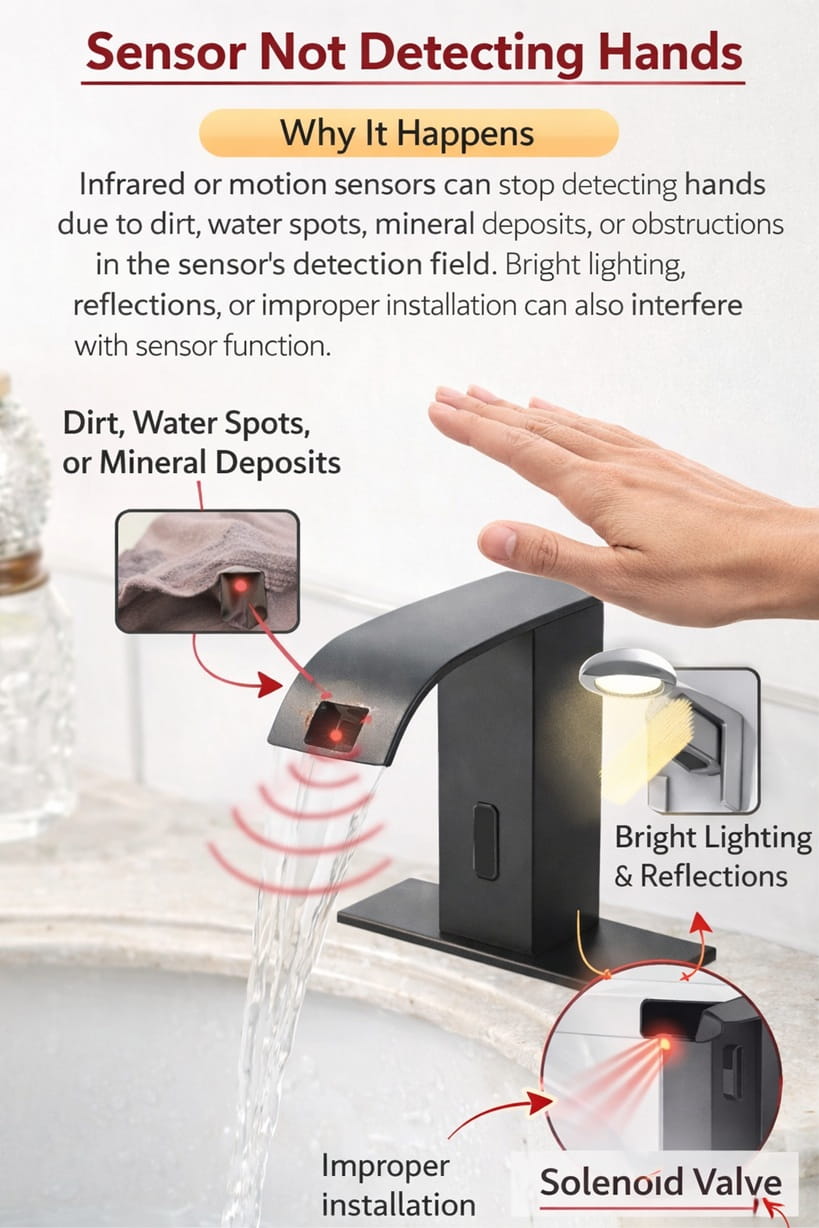
Infrared or motion sensors can stop detecting hands due to dirt, water spots, mineral deposits, or obstructions in the sensor’s detection field. Bright lighting, reflections, or improper installation can also interfere with sensor function.
How to Fix It
Gently clean the sensor lens with a soft, damp cloth.
Remove mineral buildup using a vinegar solution.
Ensure there is no obstruction between hands and sensor.
Reduce strong ambient or reflective light around the faucet.
When to Replace
Replace the sensor or faucet if cleaning and recalibration fail, or if the sensor board is damaged or corroded.
Estimated Repair Cost
Cleaning: minimal
Sensor part replacement: $60–$180
Full faucet replacement: $200–$700
Prevention Tips
Clean the sensor regularly.
Keep soap and splashes from coating the sensor.
Avoid installing under strong directional lighting.
Water Pressure Drops Randomly
Why It Happens
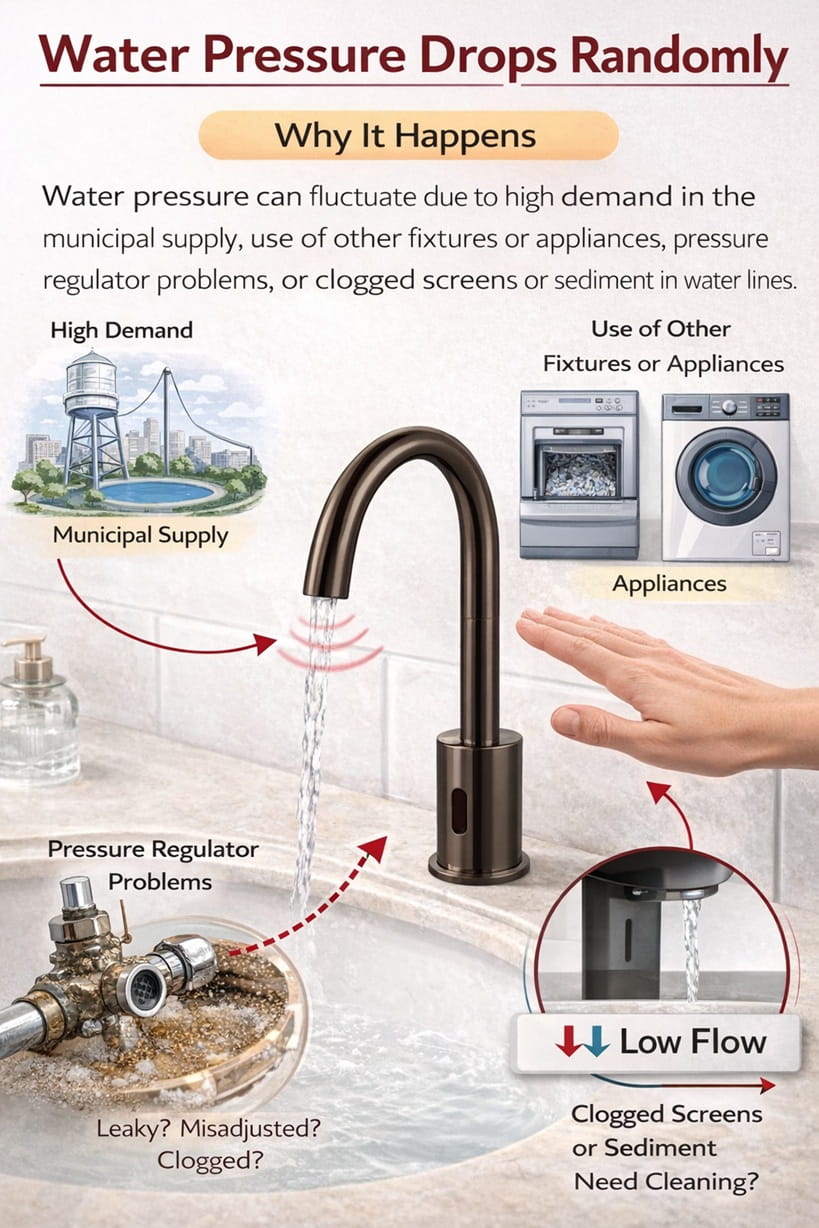
Low or fluctuating pressure in a touchless faucet can stem from clogging in the aerator, sediment or debris in the solenoid valve, partially blocked supply lines, or inconsistent opening of the solenoid due to voltage issues.
How to Fix It
Remove and clean the aerator screen.
Flush the water supply and check for blockages.
Inspect solenoid valve for debris or mineral buildup.
Ensure water supply shutoff valves are fully open.
When to Replace
If internal corrosion or repeated pressure problems persist despite cleaning and basic repairs, replacement may be more cost-effective.
Estimated Repair Cost
Aerator cleaning: minimal
Solenoid cleaning: $0–$30
Solenoid replacement: $50–$150
Full faucet replacement: $250–$600
Prevention Tips
Install a sediment filter in hard-water areas.
Clean aerators every 3–6 months.
Flush lines periodically to avoid scale buildup.
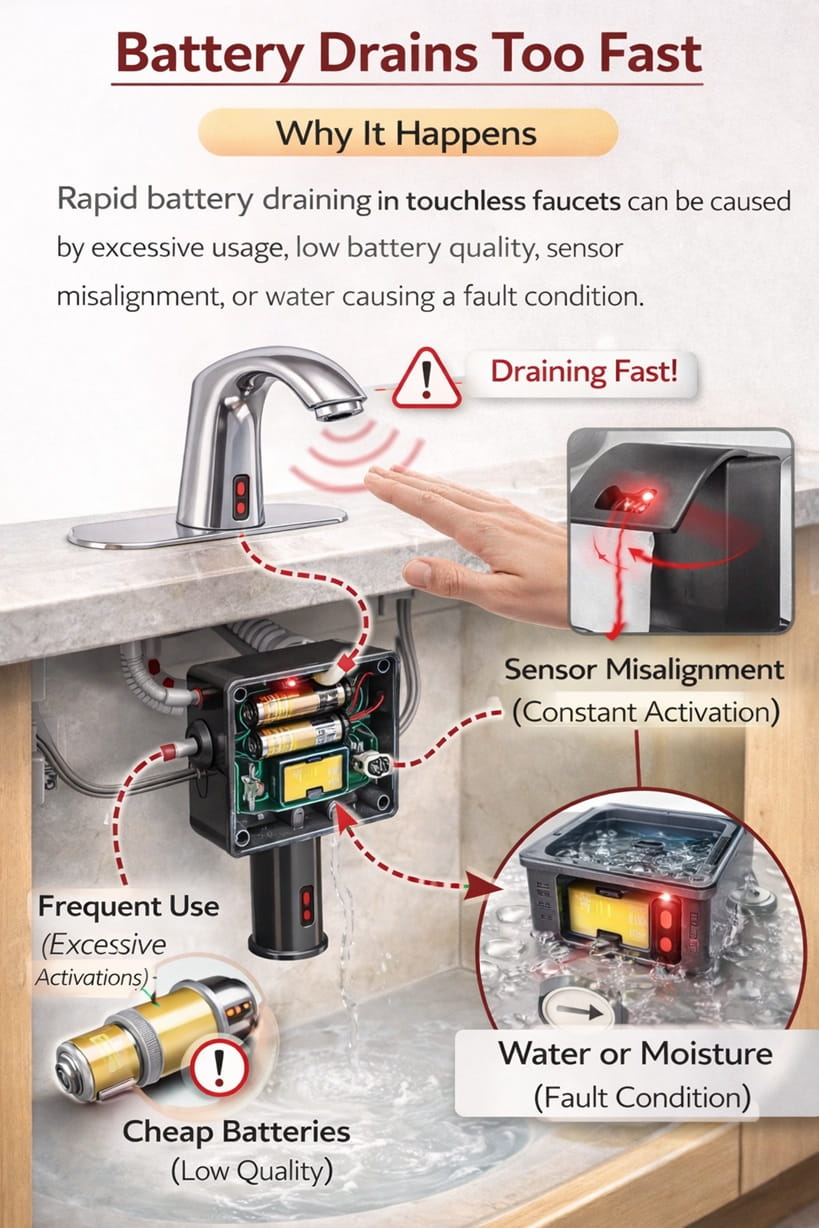
Battery Drains Too Fast
Why It Happens
Fast battery drain is often caused by a sensor or control board malfunction that draws excess power. Frequent activation, moisture in the battery compartment, or faulty wiring can also contribute.
How to Fix It
Install high-quality alkaline or lithium batteries.
Inspect for constant false triggers around the sensor.
Make sure battery compartment stays dry.
Check for wiring shorts or corrosion.
When to Replace
Replace if batteries last only a few weeks and troubleshooting doesn’t improve performance, or if the control board is damaged.
Estimated Repair Cost
Premium batteries: $15–$40
Control module replacement: $100–$250
New faucet: $200–$700
Prevention Tips
Consider AC-powered models in commercial or high-use areas.
Replace batteries proactively.
Seal battery compartment from moisture.
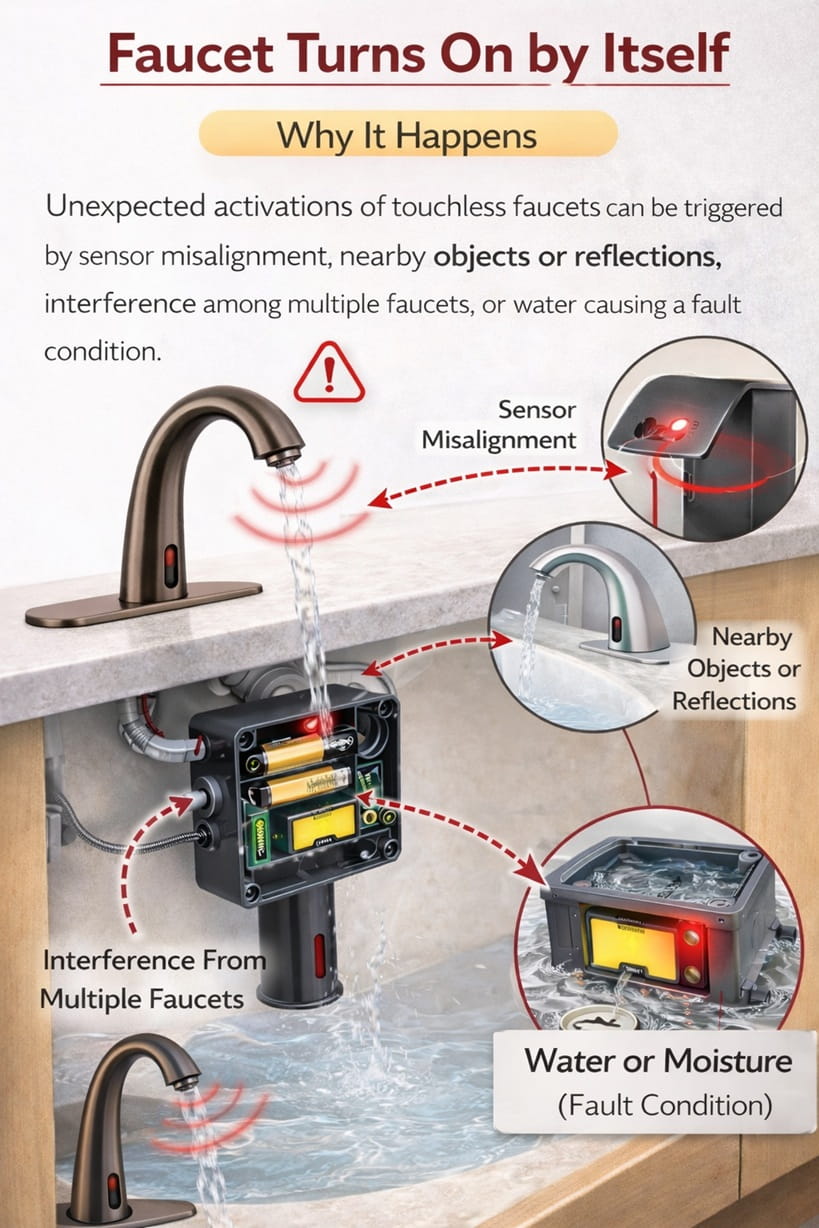
Faucet Turns On by Itself
Why It Happens
Unintended activation occurs when sensors detect false reflections or movements. Reflective surfaces, strong light sources, or electrical interference can trigger the sensor even when no hands are present.
How to Fix It
Remove nearby shiny or reflective objects.
Adjust lighting conditions to reduce glare.
Reset or recalibrate the sensor if possible.
Reposition sensor height or angle if model allows.
When to Replace
Replace if environmental fixes don’t stop random activations and the sensor board cannot be recalibrated or repaired.
Estimated Repair Cost
Sensitivity adjustment: free
Sensor board replacement: $80–$200
Full replacement: $250–$600
Prevention Tips
Avoid installation near mirrors or bright windows.
Use matte surfaces around the sensor zone.
Perform final lighting validation during installation.
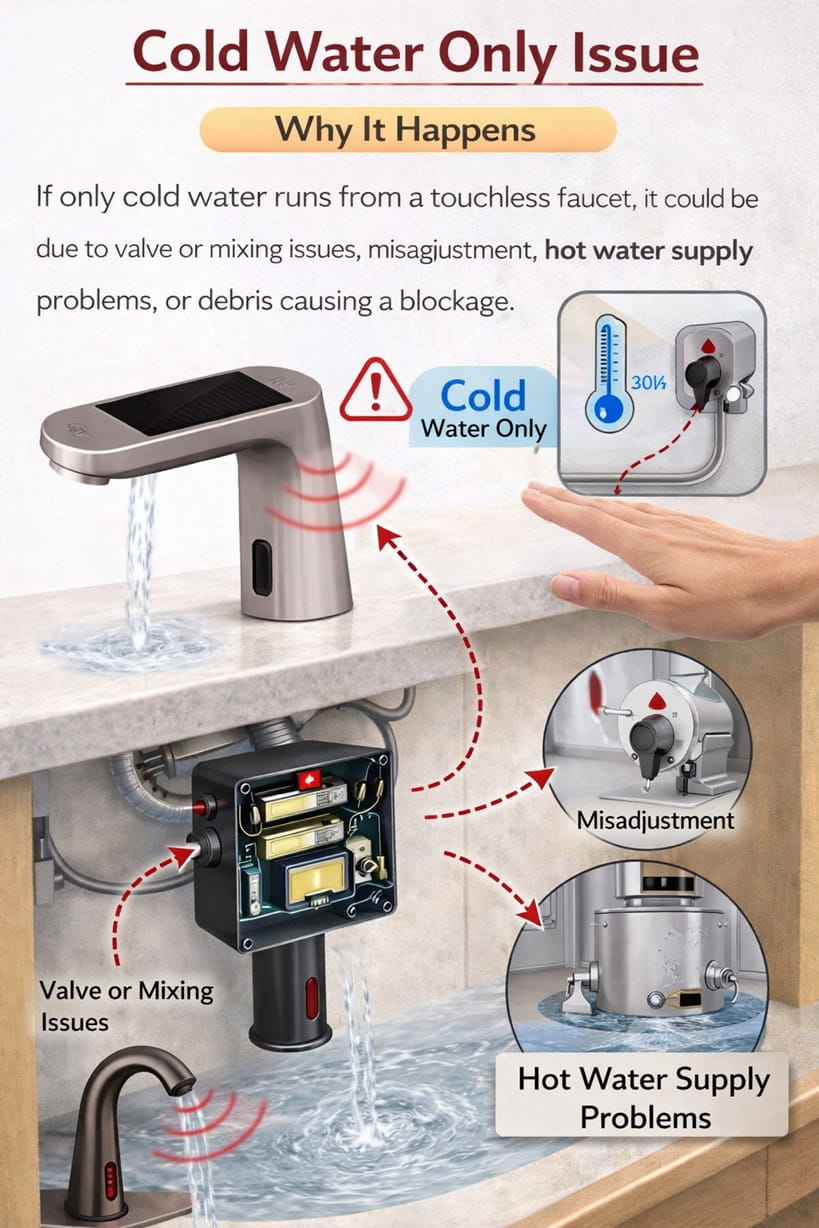
Cold Water Only Issue
Why It Happens
Cold-only output usually reflects problems with the hot side of the water supply, incorrect mixing valve setup, blocked hot supply, or an internal valve malfunction.
How to Fix It
Check that the hot water shutoff valve is fully open.
Flush any mineral buildup from the hot water line.
Inspect the mixing valve for proper configuration.
Confirm hot water heater is functioning.
When to Replace
Replace if the internal mixing mechanism or temperature control components fail repeatedly and parts are unavailable.
Estimated Repair Cost
Valve cleaning: $20–$80
Mixing valve replacement: $60–$200
Full faucet replacement: $200–$700
Prevention Tips
Flush hot water lines regularly.
Install water softeners in hard-water areas.
Verify proper orientation of hot and cold lines during installation.
Solenoid Valve Failure
Why It Happens
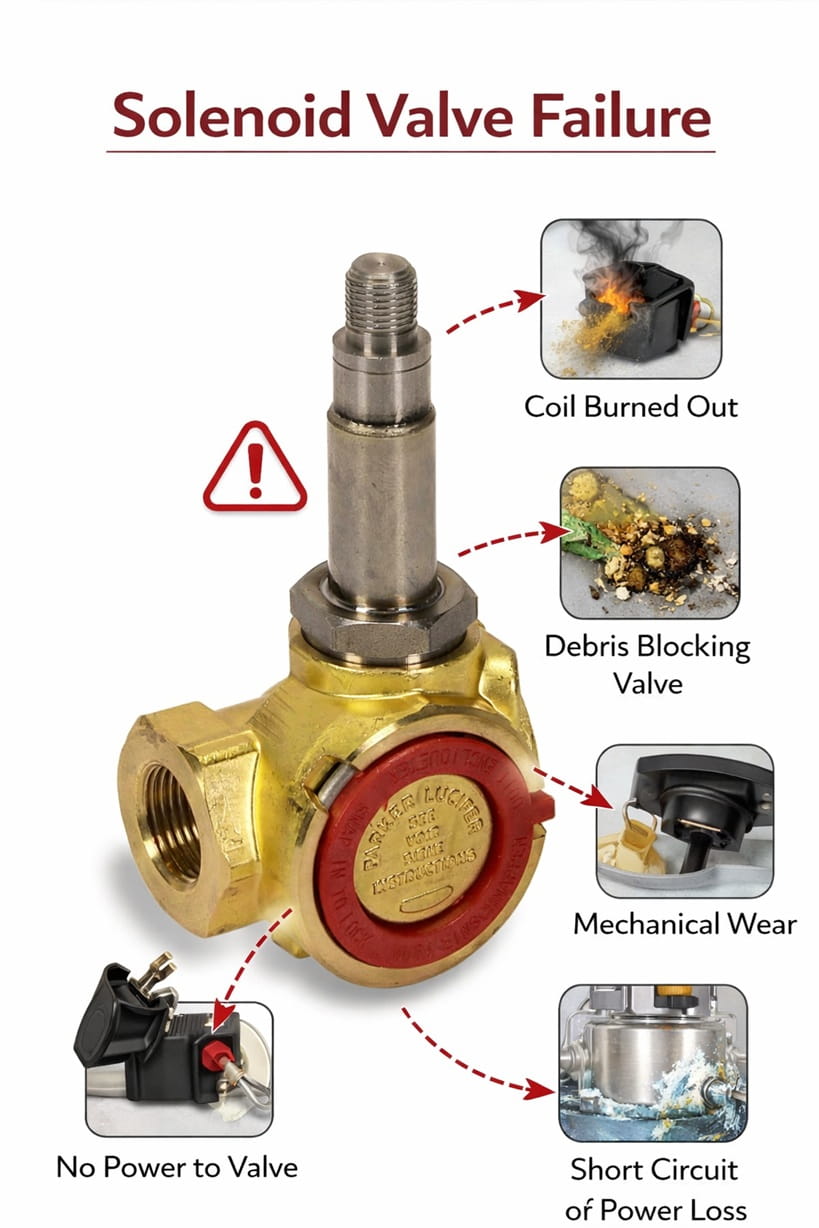
The solenoid valve is the mechanical component that opens and closes the water flow in response to the sensor signal. It can fail due to mineral buildup, debris obstruction, corrosion, electrical surges, or pressure imbalances.
How to Fix It
Turn off water and power before inspecting.
Clean solenoid valve internals by soaking in vinegar to dissolve build-up.
Replace the solenoid if cleaning doesn’t restore proper function.
Confirm consistent power delivery to the solenoid.
When to Replace
Replace if cleaning does not resolve the issue, the solenoid coil is damaged, or repeated failures occur.
Estimated Repair Cost
Solenoid cleaning: minimal
Solenoid replacement: $50–$150
Full faucet replacement: $250–$800
Prevention Tips
Install water filters to reduce sediment.
Flush supply lines periodically.
Keep electronics dry and protected.